Customs Today
  • Home
  • Islamabad
  • Karachi
  • Lahore
  • National
  • Transfers and Postings
  • Chambers & Associations
  • Business
No Result
View All Result
Customs Today
  • Home
  • Islamabad
  • Karachi
  • Lahore
  • National
  • Transfers and Postings
  • Chambers & Associations
  • Business
No Result
View All Result
Customs Today
No Result
View All Result
Home Science & Technology Science

12-million-year-old fossil may expose how humans began their first walk

byCustoms Today Report
06/02/2015
in Science, Science & Technology
Share on FacebookShare on Twitter

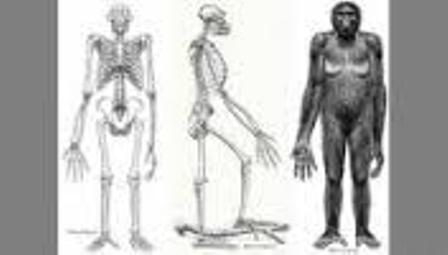
ISLAMABAD: A recently found fossil may make anthropologists rewrite the whole evolutionary history of how the early humans first began to walk upright on their two legs.

The 12-million-year-old fossilised hipbone belonging to a prehistoric ape named Sivapithecus indicus discovered in Siwalik range of Pakistan can challenge the long held belief that our upright posture was evolved through a common ancestor with great apes, including chimpanzees, gorillas and orangutans, around 15 million years ago, which led to the broad torsos and mobile forelimbs that appear in all great apes -known as the orthograde body plan.


You might also like

Tesla driverless system to use updated radar technology

12/09/2016

Apple to develop its own self-driving technology

10/09/2016

The fossilised species was thought to be an ancient relative of the orangutan that emerged after the great apes split from the gibbons and lived around 12 million to 10 million years ago.

Fossilised skull fragments have suggested it had the facial features similar to modern orangutans and scientists assumed it would also have an ape-like body plan.

However, the new hipbone has revealed that these creatures had a narrow torso that more resembles those of monkeys.

This suggests that Sivapithecus may have had both ape-like and monkey-like features, and has left researchers baffled about how it fits into the evolutionary tree.

If it is indeed an ancestor of the orangutan, then it could mean that the upright ape-like body plan evolved at least twice in the past – once in orangutans and once in other great apes.

“We always thought if we found this body part, that it would show some of the features we find in the living great apes,” said Michele Morgan, curator of osteology and paleoanthropology at the Peabody Museum of Archaeology and Ethnology at Harvard University.

“People had commonly thought that this torso shape was shared among all the great apes, meaning it must have evolved in a common ancestor,” he said.

There are a number of competing theories for how our ape ancestors first began walking on two legs.


Tags: 12-million-year-old fossilEthnology at Harvard University.humans start to walkPeabody Museum of ArchaeologySivapithecusSivapithecus indicus discoveredSiwalik range of Pakistan

Related Stories

Tesla driverless system to use updated radar technology

byCT Report
12/09/2016

WASHINGTON: Electric carmaker Tesla announced Sunday it was upgrading its Autopilot software to use more advanced radar technology. In a...

Apple to develop its own self-driving technology

byCT Report
10/09/2016

SAN FRANCISCO: Apple may not become an automaker, but it still wants to develop its own self-driving technology. The iPhone-maker's...

NASA spots slowest known magnetar

byCT Report
10/09/2016

WASHINGTON: Astronomers have found evidence of a magnetar - magnetised neutron star - that spins much slower than the slowest...

‘YouTubers’ outshining old-school television

byCT Report
09/08/2016

SAN FRANCISCO: A media revolution is taking place, and most people over 35 years of age aren’t tuned in. Millennial...

Next Post

FBR freezes IESCO’s bank accounts on Withholding Tax issue

  • Terms and Conditions
  • Disclaimer

© 2011 Customs Today -World's first newspaper on customs. Customs Today.

No Result
View All Result
  • Transfers and Postings
  • Latest News
  • Karachi
  • Islamabad
  • Lahore
  • National
  • Chambers & Associations
  • Business
  • About Us

© 2011 Customs Today -World's first newspaper on customs. Customs Today.