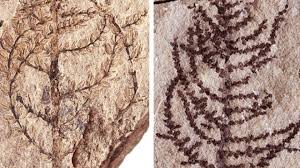


LONDON: A plant that had no petals and lived underwater more than 125 million years ago could be the oldest known ‘flower’, according to scientists. The aquatic Montsechia vidalii was once abundant in freshwater lakes in what are now mountainous regions of central and northern Spain.
It lived during the early Cretaceous period, when dinosaurs such as the Brachiosaurus and Iguanodon walked the Earth and may even have nibbled it.
The fossil was discovered more than 100 years ago in limestone deposits, but its significance has only recently become apparent after scientists look a fresh look. Experts have now dated the weed at between 125 million and 130 million years old and have shown that despite appearances, it was a flowering plant, or angiosperm. An aquatic plant called Archaefructus sinensis, which was discovered in China, has also been proposed as the oldest flower ever found, but M vidalii may be older.
“This discovery raises significant questions about the early evolutionary history of flowering plants, as well as the role of these plants in the evolution of other plant and animal life,” said lead scientist Professor David Dilcher, from Indiana University.
“A ‘first flower’ is technically a myth, like the ‘first human’. But based on this new analysis, we know now that Montsechia is contemporaneous, if not more ancient, than Archaefructus.”
The research, reported in the journal Proceedings of the National Academy of Sciences, was based on an analysis of more than 1,000 Montsechia fossils. Stems and leaf structures were coaxed from the fossil stone by applying hydrochloric acid drop-by-drop and were then examined under a microscope.

Karachi Port sets 138-year cargo handling record
KARACHI: Pakistan's maritime sector has achieved a major milestone as Karachi Port set a new record in its 138-year history...