

Customs Today
  • Home
  • Islamabad
  • Karachi
  • Lahore
  • National
  • Transfers and Postings
  • Chambers & Associations
  • Business
No Result
View All Result
Customs Today
  • Home
  • Islamabad
  • Karachi
  • Lahore
  • National
  • Transfers and Postings
  • Chambers & Associations
  • Business
No Result
View All Result
Customs Today
No Result
View All Result
Home Uncategorized

125 million years underwater with no petals consider world’s oldest flower

byCustoms Today Report
19/08/2015
in Uncategorized
Share on FacebookShare on Twitter

You might also like

31/08/2026

Pakistan to get $3b loan from Islamic Trade Financing Corporation

20/10/2024

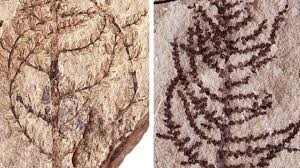
LONDON: A plant that had no petals and lived underwater more than 125 million years ago could be the oldest known ‘flower’, according to scientists. The aquatic Montsechia vidalii was once abundant in freshwater lakes in what are now mountainous regions of central and northern Spain.
It lived during the early Cretaceous period, when dinosaurs such as the Brachiosaurus and Iguanodon walked the Earth and may even have nibbled it.
The fossil was discovered more than 100 years ago in limestone deposits, but its significance has only recently become apparent after scientists look a fresh look. Experts have now dated the weed at between 125 million and 130 million years old and have shown that despite appearances, it was a flowering plant, or angiosperm. An aquatic plant called Archaefructus sinensis, which was discovered in China, has also been proposed as the oldest flower ever found, but M vidalii may be older.
“This discovery raises significant questions about the early evolutionary history of flowering plants, as well as the role of these plants in the evolution of other plant and animal life,” said lead scientist Professor David Dilcher, from Indiana University.
“A ‘first flower’ is technically a myth, like the ‘first human’. But based on this new analysis, we know now that Montsechia is contemporaneous, if not more ancient, than Archaefructus.”
The research, reported in the journal Proceedings of the National Academy of Sciences, was based on an analysis of more than 1,000 Montsechia fossils. Stems and leaf structures were coaxed from the fossil stone by applying hydrochloric acid drop-by-drop and were then examined under a microscope.


Related Stories

byCT Report
31/08/2026

Pakistan, Saudi Arabia set $3bn target for agricultural, food exports Pakistan and Saudi Arabia have set a target to increase...

Pakistan to get $3b loan from Islamic Trade Financing Corporation

byCT Report
20/10/2024

ISLAMABAD: Islamic Trade Financing Corporation (ITFC) to provide Pakistan with a $3 billion loan, according to an official statement released...

Lahore I&I & Enforcement anti-smuggling operations achieve record success in early FY 2024-25

byCT Report
10/09/2024

LAHORE:  Regional Directorate of Customs Intelligence & Investigation has demonstrated exceptional performance in the first two months of the fiscal...

ICCI and CDA to join hands for tree plantation drive in Capital

byQaisar Mansoor
09/08/2023

ISLAMABAD: Islamabad Chamber of Commerce and Industry (ICCI) in collaboration with the Capital Development Authority (CDA) would jointly launch a...

Next Post

Bangladesh garment exports decline 11.96% to $2.21b in July

  • Terms and Conditions
  • Disclaimer

© 2011 Customs Today -World's first newspaper on customs. Customs Today.

No Result
View All Result
  • Transfers and Postings
  • Latest News
  • Karachi
  • Islamabad
  • Lahore
  • National
  • Chambers & Associations
  • Business
  • About Us

© 2011 Customs Today -World's first newspaper on customs. Customs Today.