ISLAMABAD: Ambassador to China Masood Khalid, speaking at a China-Pakistan Trade and Investment Symposium in Beijing, has said that Pakistan attached great value to facilitating the Chinese business community and urged them to explore the vast market potential of the country.
The event aimed at enabling participants from Pakistani business and investment community to interact with their Chinese counterparts to expand mutual cooperation and investment, explore opportunities, and promote trade contacts.
You might also like

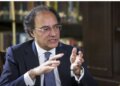
Masood Khalid said that there were several products like cotton, cotton yarn, leather, rice, cereals, animal feed, stones, marble, gems for jewellery, fruits and vegetables where joint ventures could be considered. He said Chinese companies could join Pakistani entities to develop the agriculture sector for “our common food security”.
The ambassador said both nations had evolved a viable framework and legal architecture to develop their economic cooperation. There are several mechanisms, such as the Joint Economic Commission and Joint Investment Company to allow for meaningful cooperation.
The bilateral Free Trade Agreement signed in 2007 was fully operational, he said and added that a wide trade gap existed but work was in progress on allow easier access of Pakistani imports into China, provide a level playing field for exporters and encourage investment and marketing missions from China for bulk purchases from Pakistan.
Song Jianming, Deputy Director General of the Beijing Municipal Commission of Commerce, said the total import and export commodity trade volume between China and Pakistan during 2014 was very encouraging.
Chinese exports to Pakistan included mobile phones, heat exchange equipment and steel, while imports mainly focused on textile yarn, agricultural products and unwrought copper and copper products.
He said that since this year was a special year of friendship between the two countries set to promote relations by enhancing exchanges, he welcomed Pakistani enterprises and trade delegations to participate with the Chinese counterparts in a series of business activities to be held in China, such as the Canton Fair, Imported Commodities Shopping Festival and E-commerce Seminar, in order to exhibit and purchase commodities.
Earlier, Agha Waqar Javed, Member Public-Private Partnerships of the Planning and Development Department, listed opportunities available when government partnered with the private sector to deliver a project.
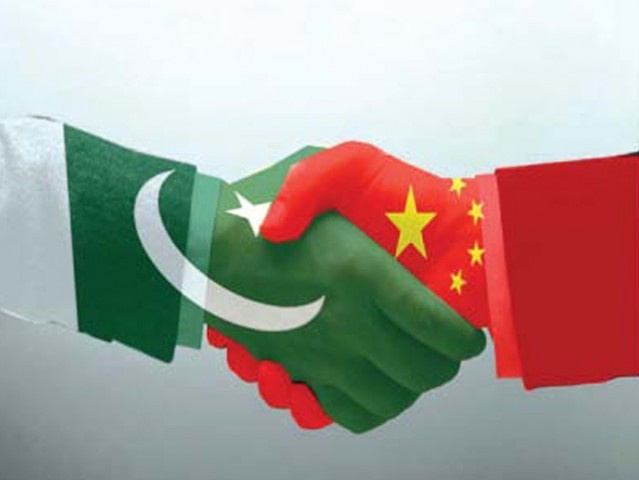
The Pak-China Free Trade Agreement is a major free trade agreement signed between both the countries. It was concluded in 2006 and entered into effect in July 2007. Trade volume due to this agreement between the two states was $13 billion in 2013, while is expected to reach $15 billion by 2015. China had been contributing significantly to Pakistan’s imports even before the FTA was signed and has seen considerable improvement in its ranking after the FTA was implemented in 2007. By 2012, it was the source for 15% of Pakistan’s overall imports from the world as compared to 9.8% in 2006.