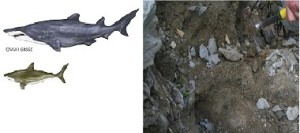
NEW YORK: In 2009, Janessa A. Doucette-Frederickson over a boulder and noticed a large protruded vertebra while looking at a dig in the Duck Creek Formation of Texas. The research team extracted three large vertebrae with each measuring 4.5 inches (11.4 centimeters) in diameter. When she scrutinized it afterwards with fellow researcher and now spouse Joseph Frederickson, they found out that it is an odd-looking gigantic fossil remnant.
Together with the members of their paleontology club and research group, they realized that they are looking at vertebrae of a massive, primitive shark.


Considering the sheer size of the vertebrae, the researchers discerned that the shark measures 20 to 22 feet in length and they dubbed it as a “gigantic shark” in their research findings that is published in the PLOS One journal.
Joseph stated in a phone interview, “We thought it was a really large fossil and we all came together and dug it out.” He added that, “We realized it was a really large shark.”
The find went unstudied at the outset, since sharks were no longer covered in Frederickson’s background and her fellow researchers were not certain about the discovery’s milieu.
Several years later Joseph went on to finish his doctorate degree at University of Oklahoma and picked off what he left off. Armed with more knowledge this time Joseph believed that he could analyze the fossils successfully.
Joseph said that he contributed the fossils to the Oklahoma Museum of Natural History, and so they could be worked on. Joseph stated, “They were really cool…and really big,” he said. “I looked through the literature and realized there was another really large shark, of which only one vertebrae had been found, and it was from Kansas.”
http://www.dailytimesgazette.com/22-foot-fossil-remains-of-a-massive-shark-unearthed-in-texas/11760/