Customs Today
  • Home
  • Islamabad
  • Karachi
  • Lahore
  • National
  • Transfers and Postings
  • Chambers & Associations
  • Business
No Result
View All Result
Customs Today
  • Home
  • Islamabad
  • Karachi
  • Lahore
  • National
  • Transfers and Postings
  • Chambers & Associations
  • Business
No Result
View All Result
Customs Today
No Result
View All Result
Home Science & Technology Science

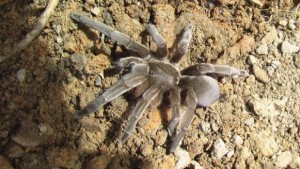
25,000 diving tarantulas discover in Northern Territory

byCustoms Today Report
29/06/2015
in Science, Science & Technology
Share on FacebookShare on Twitter

SYDNEY: A TINY settlement in the sparsely-populated Northern Territory of Australia has been the subject of scientific attention, after it was discovered that a nearby flood plain is home to an infestation of 25,000 tarantulas from a newly-discovered species.

However, rather than this unsettling news making sure that no-one will ever visit the town again, a leading Australian arachnologist believes that this could be good news for the remote community of Maningrada, which is over 300 miles from Darwin, the nearest city.


You might also like

Tesla driverless system to use updated radar technology

12/09/2016

Apple to develop its own self-driving technology

10/09/2016

Dr Robert Raven, a senior curator at the Queensland Museum, believes that the venom of the spiders, which is strong enough to induce vomiting in humans, could be used for medical research purposes.

Speaking to the Sydney Morning Herald, he said that “pharmaceutical applications could apply across a broad spectrum.”

The spider, which is commonly called the diving tarantula due to its worrying ability to survive underwater by creating air bubbles, was only discovered in 2006, and the full potential of it as a medical resource has not yet been realised.

The uniquely high concentration of spiders in Maningrada means that it would make the business of finding the spiders and extracting their venom much easier.

Dr Raven said that the normal colony size is only around two or three hundred spiders – around 100 times smaller than the size of the newly-discovered cluster.

The sheer size of the Maningrada group could be very attractive to biologists and medical researchers trying to find out more about the under-researched creatures.

Dr Raven hopes that the attractiveness of the region to researchers could work in favour of the small community, which is mostly made up of Aboriginal people.

He told ABC News that the intellectual property surrounding the spider belongs to the community.

 

Related Stories

Tesla driverless system to use updated radar technology

byCT Report
12/09/2016

WASHINGTON: Electric carmaker Tesla announced Sunday it was upgrading its Autopilot software to use more advanced radar technology. In a...

Apple to develop its own self-driving technology

byCT Report
10/09/2016

SAN FRANCISCO: Apple may not become an automaker, but it still wants to develop its own self-driving technology. The iPhone-maker's...

NASA spots slowest known magnetar

byCT Report
10/09/2016

WASHINGTON: Astronomers have found evidence of a magnetar - magnetised neutron star - that spins much slower than the slowest...

‘YouTubers’ outshining old-school television

byCT Report
09/08/2016

SAN FRANCISCO: A media revolution is taking place, and most people over 35 years of age aren’t tuned in. Millennial...

Next Post

Lotus discloses its fastest, priciest new 3-Eleven model, at 2015 Goodwood Festival of Speed

  • Terms and Conditions
  • Disclaimer

© 2011 Customs Today -World's first newspaper on customs. Customs Today.

No Result
View All Result
  • Transfers and Postings
  • Latest News
  • Karachi
  • Islamabad
  • Lahore
  • National
  • Chambers & Associations
  • Business
  • About Us

© 2011 Customs Today -World's first newspaper on customs. Customs Today.