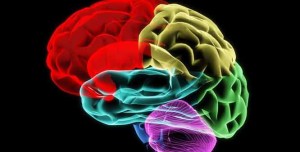
LOS ANGELES: Scientists have developed a 3D ‘brain dictionary’ that may help decode our inner thoughts and give voice to people who cannot speak, such as those who have had a stroke, brain damage or motor neuron diseases.
Researchers built a “semantic atlas” that shows in vivid colours and multiple dimensions how the human brain organises language. The atlas identifies brain areas that respond to words that have similar meanings.

The thesaurus-like map could eventually help give voice to those who cannot speak, such as people who have had a stroke, brain damage or motor neuron diseases such as ALS, researchers said.
Researchers showed that at least one-third of the brain’s cerebral cortex – including areas dedicated to high-level cognition – is involved in language processing.
The study found that different people share similar language maps. “The similarity in semantic topography across different subjects is really surprising,” said study lead author Alex Huth, from the University of California, Berkeley.
While mind-reading technology remains far off on the horizon, charting language organisation in the brain brings decoding inner dialogue a step closer, researchers said.
“This discovery paves the way for brain-machine interfaces that can interpret the meaning of what people want to express,” Huth said.
“Imagine a brain-machine interface that doesn’t just figure out what sounds you want to make, but what you want to say,” he said.
For example, clinicians could track the brain activity of patients who have difficulty communicating and then match that data to semantic language maps to determine what their patients are trying to express.
Another potential application is a decoder that translates what you say into another language as you speak. Huth and six other native English speakers participated in the experiment, which required them to remain still inside a functional Magnetic Resonance Imaging (fMRI) scanner for hours at a time.
Each study participant’s brain blood flow was measured as they listened to more than two hours of stories from a public radio show.
The participants’ brain imaging data were matched against time-coded, phonemic transcriptions of the stories. Phonemes are units of sound that distinguish one word from another.
The researchers then fed that information into a word-embedding algorithm that scored words according to how closely they are related semantically.
The results were converted into a thesaurus-like map that arranged words on images of the flattened cortices of the left and right hemispheres of the brain.
The maps show that many areas of the human brain represent language that describes people and social relations, rather than abstract concepts. The research was published in the journal Nature.