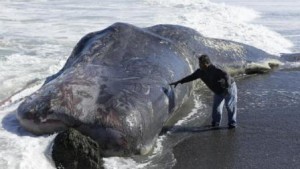


WASHINGTON: The whale had been moving in a straight line and at a consistent pace, but when it saw us, it put on the brakes.
WBRZ Reports, the curious sperm whale swam up to underwater probes being used by the Natilus Exploration Program.
The whale came close enough for viewers to spot scratches on its head and look the whale in the eye.The scientists and sailors were stunned.
As the team was lowering its remote-controlled submersible, ROV Hercules, they had the opportunity to witness something incredibly rare.An unidentified creature, which the team would eventually recognize as a sperm whale, approached Hercules.
All thoughts of tuna left our minds, and we altered our course to intercept the giant mammal.
The Nautilus team is just days into the first leg of a six-month mission, which includes ongoing research into the effects of the 2010 Deepwater Horizon oil spill and other sea-floor mapping projects.
The E/V Nautilus team – which is exploring the ocean, studying biology, geology, archeology and more – said such encounters are extremely rare. Adults grow to be as long as 60 feet, making them the largest toothed predator in the world.The head alone makes up roughly one-third of their body length. These animals, which live to be up to 60 years old, are also the loudest species on the planet, generating calls up to 230 decibels.

Karachi Port sets 138-year cargo handling record
KARACHI: Pakistan's maritime sector has achieved a major milestone as Karachi Port set a new record in its 138-year history...