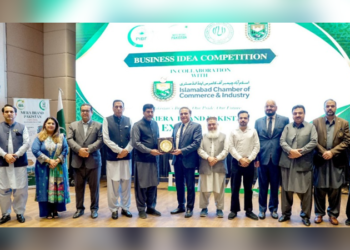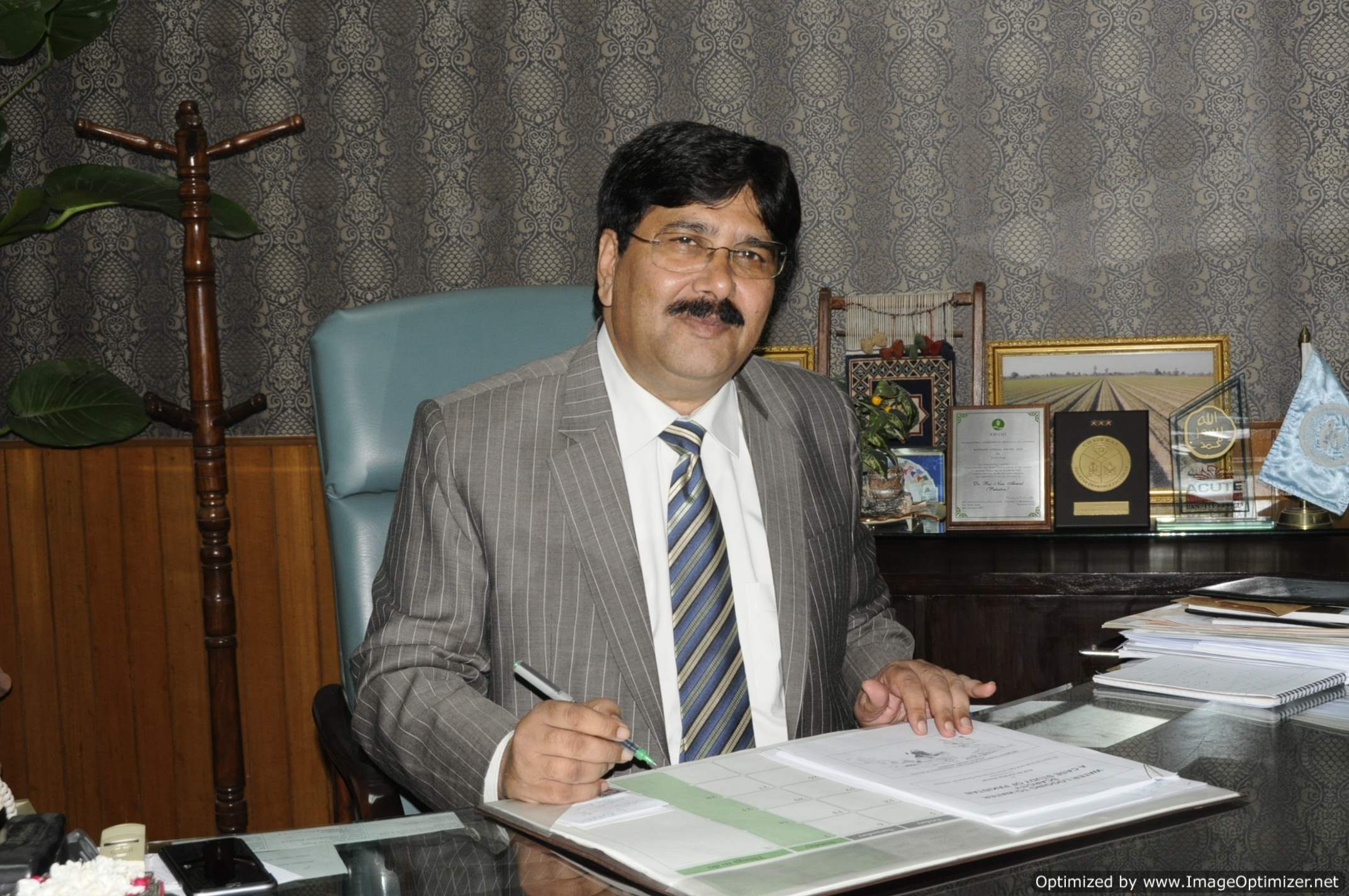
ISLAMABAD: Vice Chancellor Pir Mehr Ali Shah (PMAS)-Arid Agriculture University Rawalpindi Prof. Dr. Rai Niaz Ahmad, termed the corporate farming as the sole method to increase tax revenue collection as well as to overcome the existing lope holes in tax system.
In an exclusive interview with Customs Today Prof. Dr. Rai Niaz Ahmad observed that tax revenues in other developed countries were higher because of the fact those countries had shifted their agricultural sector over to corporate farming.
“The day you declare your agricultural sector as an industry then you start collect tax revenues at once” he added saying that Pakistan lacked in the revenue collection because of the issue that we had imposed indirect taxation on agricultural products. Therefore, we must at first declare our agricultural sector as industry and then shift our indirect taxation over to the direct taxation on the agricultural yields.
Only through this method, he said that country could move towards the economic self reliance as well as enhance the tune of tax collection by several times. Presently, our peasant pays tax on a number of times which is the worst form of taxation; for example, grower pays tax on seeds, fertilizers, electricity, irrigation and on other products; however, once our agricultural sector is included in the category of industrial units, then farmer will get uninterrupted power supply, international certified seeds along with other incentives being enjoyed by the industrial sector.
Replying to a question, regarding possible ways for our agricultural sector to benefit out of China Pakistan Economic Corridor (CPEC) Prof. Dr. Rai Niaz Ahmad said that CPEC would bring about revolution in our agricultural sector because of the fact that our farmers would be able to use the innovative agricultural mechanism, improved and refined ways on pesticides, sprays and others being used by Chinese farmers.
Moreover, Chinese agricultural and irrigational methods, he said that would also bring about revolution in our country just because of the fact that Chinese agricultural sector has almost been developed. This is why per acre yield of crop is far higher in China than Pakistan. Furthermore, he said that import duty on agricultural sector related imports from China would also take our tax revenue collection to higher amounts. In this regards, Federal Board of Revenue (FBR) is required to learn the mechanism for the imposition and collection of tax on agricultural products from Chinese tax authorities.
To another question about the ratio of possible tax collection from imports from Chinese agricultural products, Prof. Dr. Rai Niaz Ahmad said that since Pakistan was an agricultural based economy; therefore, it was difficult to gauge the exact ratio of increased tax collection from imports from China related to agricultural sector; however, most probably our tax collection may increase by several times just because of the fact that other regional countries would also tend to use Chinese agricultural sector related products from Pakistan once they would have been made available in Pakistani markets for exports to neighbouring countries.
To another question related to national rainwater resources, he commented that metrological footprints of Pakistan reveal abundant rainfall ranging from 200mm to 1500mm per annum, but major portion of this rainfall is wasted. As a new vision for water manager, farmers, and policy makers, we have initiated rainwater harvesting program at its Research Farm located on Mandra Chakwal Road. The farm is being transformed into a model demonstration unit embarking upon new era of modern mechanized agriculture supported with high efficiency irrigation systems powered through solar panels.
He further elaborated that in this program five farm ponds with a capacity of 80 acre-ft of water have been excavated. Experience indicates that these ponds were filled to their capacity in early rain showers of the monsoon season 2013. The developed farm ponds are sufficient to irrigate an area of 150 acres orchard crops including olive, grapes, citrus, fig, apricot, almond, pears besides tunnel vegetables especially tomato, cucumber, etc. using drip irrigation.