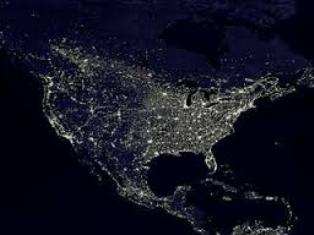


CANADA: A new study suggests that gazing upon a naturally dark sky that is unpolluted by artificial light plays a significant role in visitors’ enjoyment of national parks.
“There is a growing consciousness in the U.S. about the disappearance of naturally dark skies that’s kind of paradoxical,” said Bob Manning, who runs the Park Studies Laboratory at the University of Vermont. “It’s one of those things that we start to notice only when it begins to disappear.”
Scientists estimate that 99 percent of the planet’s skies are light polluted and that as of 15 years ago, two-thirds of Americans could no longer see the Milky Way from their backyards.
For many Americans, the opportunity to see the night sky glittering with the full cast of stars our ancestors once observed has become a reason in itself to visit a national park, and the National Park Service has taken notice. For the last decade its Natural Sounds and Night Sky Division has worked to manage both acoustical and dark night sky environments throughout the National Park System.
Within the park, managers can replace older lighting fixtures that allow light to “leak” into the atmosphere with those that focus light down on an intended target, for example. Keeping artificial light from surrounding areas out of the park may be more challenging, but it is not impossible, Manning said.
To help parks service workers communicate the draw of naturally dark skies to nearby communities, Manning’s group conducted two surveys at Acadia National Park in Maine. The first was designed to quantify how important a clear view of the stars is to park visitors. The second looked at what point the level of light pollution in a park would be considered unacceptable by most visitors.
The results of the two surveys were published last week in the journal Park Science.
Nearly all of the hundreds of groups surveyed agreed very strongly that seeing the night sky on their visit to Acadia was important to them, and said they recognized the park as a good place to see the night sky.
The researchers also found that when people reported seeing natural light sources such as the moon, stars, constellations and the Milky Way, it improved their experience of the park. Seeing man-made light sources such as headlights, streetlights and light from nearby cities had a negative effect on their experience of the park.

Karachi Port sets 138-year cargo handling record
KARACHI: Pakistan's maritime sector has achieved a major milestone as Karachi Port set a new record in its 138-year history...