Customs Today
  • Home
  • Islamabad
  • Karachi
  • Lahore
  • National
  • Transfers and Postings
  • Chambers & Associations
  • Business
No Result
View All Result
Customs Today
  • Home
  • Islamabad
  • Karachi
  • Lahore
  • National
  • Transfers and Postings
  • Chambers & Associations
  • Business
No Result
View All Result
Customs Today
No Result
View All Result
Home Business

Land disparity causes poverty: 88% small farmers hold less than 12.5% land, 1.5% big farmers own over 150 acres

byCustoms Today Report
30/03/2015
in Business
Share on FacebookShare on Twitter

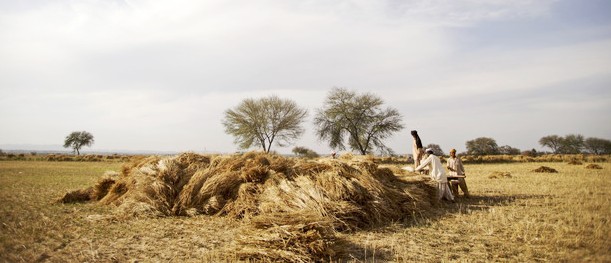
LAHORE: Land inequality in Pakistan is causing poverty as the larger farmers’ income is 31 times more than the average income, said a report issued by the Pakistan Institute of Labour Education and Research (PILER).

The report “Profiles of Land Tenure System in Pakistan” has been authored by Dr Kaiser Bengali, senior economist and Advisor to Chief Minister Balochistan.


You might also like

Kerosene prices slashed by Rs48.29 per litre in Pakistan

20/06/2026

World Bank mission reviews Sukkur Barrage project

18/06/2026

The inequality is indicated by the fact that, for 6 districts in 3 provinces, 88% of small farmers (holding less than 12.5% of land) own 49% of land and 1.5% of large farmers (holding more than 150 acres of land) own 8% of land.

The disparity has also imposed a state of chronic poverty for the landless, tenants and even the small farmers. The feudal-tribal order has ensured the continuation of patriarchy, which rules with an iron hand in rural Pakistan. Women have almost no freedom to make independent choices about socialization, health care, children’s education and marriage, voting and voting choice, and even cell phone use.

However, the level of conservatism varies with land size and pattern of tenure.” The study, first in many years, attempts to document the land tenure patterns as they currently exist in three provinces of Pakistan.

Covering 1,200 respondents (with equal representation of male and female), the study records the disparity in incomes, food consumption, housing quality, impact of floods, indebtedness, and treatment of women in different categories of landowning and non-landowning classes.

The conclusions are intended to guide the political debate regarding land issues towards more nuanced directions.

Related Stories

Kerosene prices slashed by Rs48.29 per litre in Pakistan

byCT Report
20/06/2026

ISLAMABAD: The federal government has reduced the price of kerosene oil following a series of cuts in petrol and diesel...

World Bank mission reviews Sukkur Barrage project

byCT Report
18/06/2026

SUKKUR: A World Bank Implementation Support Mission on Wednesday visited the Sukkur Barrage Rehabilitation Project to assess on-ground progress and...

New, simple electricity bill format launched

byCT Report
17/06/2026

ISLAMABAD: The Power Division has introduced a new and simplified electricity bill format across the country to improve consumer convenience,...

Petrol prices in Pakistan likely to decline

byCT Report
16/06/2026

ISLAMABAD: Following a sharp decline in global crude oil prices, petroleum product prices in Pakistan are expected to decrease in...

Next Post

Climate change to have considerable impact on Ganga's dynamics

  • Terms and Conditions
  • Disclaimer

© 2011 Customs Today -World's first newspaper on customs. Customs Today.

No Result
View All Result
  • Transfers and Postings
  • Latest News
  • Karachi
  • Islamabad
  • Lahore
  • National
  • Chambers & Associations
  • Business
  • About Us

© 2011 Customs Today -World's first newspaper on customs. Customs Today.