Customs Today
  • Home
  • Islamabad
  • Karachi
  • Lahore
  • National
  • Transfers and Postings
  • Chambers & Associations
  • Business
No Result
View All Result
Customs Today
  • Home
  • Islamabad
  • Karachi
  • Lahore
  • National
  • Transfers and Postings
  • Chambers & Associations
  • Business
No Result
View All Result
Customs Today
No Result
View All Result
Home Business

Land disparity causes poverty: 88% small farmers hold less than 12.5% land, 1.5% big farmers own over 150 acres

byCustoms Today Report
30/03/2015
in Business
Share on FacebookShare on Twitter

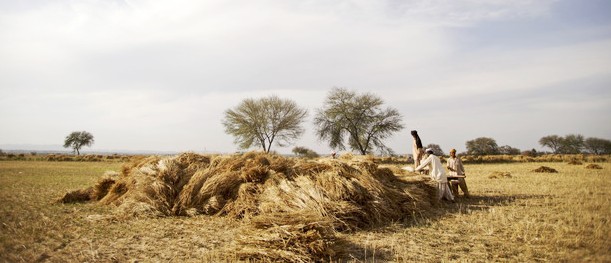
LAHORE: Land inequality in Pakistan is causing poverty as the larger farmers’ income is 31 times more than the average income, said a report issued by the Pakistan Institute of Labour Education and Research (PILER).

The report “Profiles of Land Tenure System in Pakistan” has been authored by Dr Kaiser Bengali, senior economist and Advisor to Chief Minister Balochistan.


You might also like

Cement Sales Rise 7% in September 2026

03/10/2026

FoST partners with Wateen Telecom to deploy GPON & AI-based surveillance at FRTZ

02/10/2026

The inequality is indicated by the fact that, for 6 districts in 3 provinces, 88% of small farmers (holding less than 12.5% of land) own 49% of land and 1.5% of large farmers (holding more than 150 acres of land) own 8% of land.

The disparity has also imposed a state of chronic poverty for the landless, tenants and even the small farmers. The feudal-tribal order has ensured the continuation of patriarchy, which rules with an iron hand in rural Pakistan. Women have almost no freedom to make independent choices about socialization, health care, children’s education and marriage, voting and voting choice, and even cell phone use.

However, the level of conservatism varies with land size and pattern of tenure.” The study, first in many years, attempts to document the land tenure patterns as they currently exist in three provinces of Pakistan.

Covering 1,200 respondents (with equal representation of male and female), the study records the disparity in incomes, food consumption, housing quality, impact of floods, indebtedness, and treatment of women in different categories of landowning and non-landowning classes.

The conclusions are intended to guide the political debate regarding land issues towards more nuanced directions.

Related Stories

Cement Sales Rise 7% in September 2026

byCT Report
03/10/2026

ISLAMABAD: Pakistan’s cement dispatches increased by 5.95% year-on-year to 4.621 million tons in September 2026, driven mainly by stronger domestic...

FoST partners with Wateen Telecom to deploy GPON & AI-based surveillance at FRTZ

byCT Report
02/10/2026

KARACHI: Wateen Telecom, Pakistan’s leading ICT and digital solutions provider, has entered into a strategic partnership with FonGreen Silicon Technologies...

LPG prices rise sharply as OGRA sets October rates

byCT Report
01/10/2026

ISLAMABAD: The Oil and Gas Regulatory Authority (OGRA) has announced a significant increase in liquefied petroleum gas (LPG) prices for...

McDonald’s Pakistan celebrates 28 years, recognises partners

byCT Report
30/09/2026

ISLAMABAD: McDonald’s Pakistan has marked 28 years of operations in the country by recognizing the local businesses and organizations that...

Next Post

Profit after tax up 13%: MCB Bank earns Rs24.325 billion

  • Terms and Conditions
  • Disclaimer

© 2011 Customs Today -World's first newspaper on customs. Customs Today.

No Result
View All Result
  • Transfers and Postings
  • Latest News
  • Karachi
  • Islamabad
  • Lahore
  • National
  • Chambers & Associations
  • Business
  • About Us

© 2011 Customs Today -World's first newspaper on customs. Customs Today.