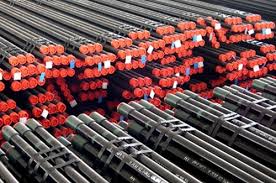
NEW DELHI: Sometime early in the last fiscal year, Mumbai Port Trust suddenly discovered that vessels containing steel shipments from countries such as China, Japan and Korea were seeking permission to dock. The port obliged and the trend continued all year.
By the end of the fiscal year, the port, among those handling the bulk of steel imports into India, saw its incoming iron and steel shipments rise to 4.1 million tonnes (mt) from 1.9 mt, a 117% jump, the highest in three years.
While the port had no reason to complain about the rise in traffic, domestic steel companies cried hoarse. And their ordeal is far from over.
But why this sudden interest in the Indian market from these countries?
While shipments from Japan and South Korea are nothing new as steelmakers there take advantage of free trade agreements (FTAs) with India, making their exports duty-free, it is China that is causing concern.
“Japan and South Korea are largely exporters of automotive-grade steel, which is not produced extensively in India, and they have been exporting even earlier. But China exports hot-rolled coils which compete directly with us; this year, they have increased their exports by a huge margin,” said T.V. Narendran, managing director, Tata Steel Ltd, on the sidelines of a press conference on 21 May.
Tata Steel, with a domestic capacity of 10 million tonnes per annum (mtpa), manufactures hot-rolled coils (HRCs) which are largely used for manufacturing automotive panels and white goods such as television sets, refrigerators and washing machines.
According to the joint plant committee (JPC), a statistical body under the ministry of steel, in fiscal 2015, India imported 9.3 million tonnes (mt) of finished steel, 71.1% higher from a year ago, while it exported a mere 5.5 mt.
“A majority of this incremental import was from China. Any further jump in imports from here on is going to be a major concern for steel companies in India,” said A.S. Firoz, chief economist, economic research unit, JPC.
India’s domestic steel production for sale in the same period was 90.5 mt, 3.3% higher than a year ago. The country’s consumption in April-March 2015 was at 76.3 mt, 3.1% higher from a year ago, according to JPC data. This rather large gap is explained by the fact that 1.45 million tonnes is retained as inventory by steel companies. Then, a significant quantity is counted twice—that is, steel bought for value addition such as galvanisation, and then resold in the market as premium steel. This double counting needs to be subtracted, putting steel consumption at 76.3 mt.
Imports from China rose by almost 70% in the last financial year due to two factors—first, Chinese steel prices are much lower than Indian steel prices; and two, if an Indian importer intends to import steel products from China or any other rouble-FTA country with the end-use of eventual exports, they are also exempted from import duty. This makes lower-priced Chinese steel preferable to steel from Japan, South Korea or even domestic steel, Firoz said.
He added that the rising imports from China is a trend seen never before, and is likely to continue in the current year if April imports are any indication.