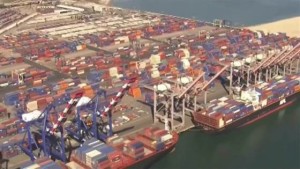
Currently 25 port complexes are responsible for moving 85 percent of the volume of international goods in the U.S.
The largest four port complexes (New York, Los Angeles, Detroit and Houston) move a combined $1.1 trillion in international goods annually, about 37 percent of all U.S. exports and imports.
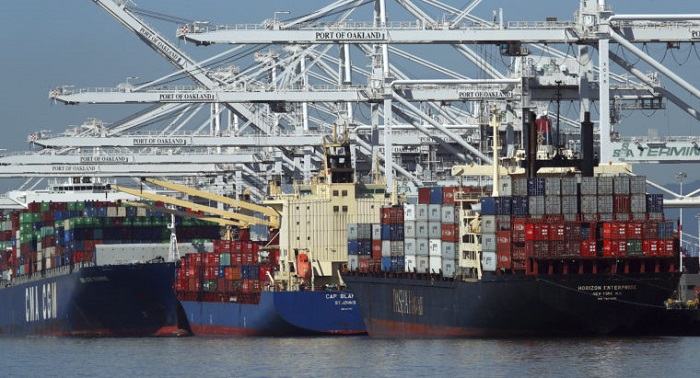

This intense concentration of international freight movement underscores the importance to the national economy of the largest U.S. ports, which rely on efficient, reliable freight infrastructure to forge key international and domestic connections.
The Trans-Pacific Partnership (TPP), a proposed international regulatory and trade treaty currently being negotiated, is likely to increase the movement of goods at the few ports handling most of the country’s Asian trade.
Trade deals like TPP and other international freight developments like the Panama Canal expansion have the potential to increase the flow of exports and imports across the U.S. However, tracking precisely where these flows would ultimately impact producers, consumers and distributors within the U.S. remains an open question.
“Given the TPP’s focus on Pacific trade, many West Coast port complexes that already handle large amounts of Asian imports and exports, such as Los Angeles, would likely be at the center of these exchanges,” says Joseph Kane, Brookings senior research assistant and co-author of the report, “Metro Modes: Charting a Path for the U.S. Freight Transportation Network.”
Kane emphasizes that increased exports and imports stretch far beyond the ports themselves. The economic effects are likely to ripple throughout the domestic freight network, ranging from large metropolitan markets like New York and Chicago to smaller areas in Connecticut, Missouri and beyond.
Seaports, airports and land border crossings in markets like Los Angeles, Miami and Detroit, respectively, tend to handle most international goods ranging from machinery and electronics to transportation equipment. “However, only four percent of these goods ultimately start or end in these local markets. The vast majority of international goods flow to and from other parts of the U.S. once they cross over the border,” says Kane.
“In fact, the average international good travels over 1,000 miles within the U.S. to get from a port to its market, underscoring how international trade relies on an efficient, reliable and integrated domestic freight network. From the perspective of ports, these flows create an enormous logistical burden for serving hundreds of different areas across the U.S. in addition to numerous global regions. Prioritizing federal, state and local freight investments at these major ports, in turn, is crucial to the country’s economy.”
Since the nation’s busiest ports tend to operate in the largest metropolitan areas, overcoming congested roads is a key step for freight policies and investments. The sheer geographic extent of markets like New York, Los Angeles and Miami often forces port-related traffic to move through neighborhoods filled with bustling local economic activity. Historically, many of these ports also developed near the economic cores of cities, so today’s port congestion is the inevitable result.
While a variety of transportation modes help stitch these regions together, including airports, railroads and waterways, trucks serve as a backbone for the nation’s entire freight network, moving more than two-thirds of the volume of all U.S. goods annually.
At the center of these movements are the country’s 100 largest metropolitan areas, which account for 60 percent ($8.1 trillion) of all goods that travel by truck. In particular, metropolitan areas that adjoin each other and have similar economic specialties can depend on trucks for 90 percent or more of their freight activity, as is evident in places like Kansas City and St. Louis or Baltimore and Washington, D.C., says Kane.
“Throughout the country, regions depend on an efficient, well-integrated infrastructure network to exchange goods with other markets. Freight policies must begin to recognize how certain places and infrastructure assets are central to this network, whether it is trucks moving electronics, pipelines moving energy or air modes carrying high-value precision instruments,” he says.
“Improving the reliability of domestic port connectors in places like Seattle and Philadelphia is essential,” says Kane. “Likewise, investing in major land border crossings, such as Detroit’s New International Trade Crossing, can help relieve congestion in busy freight corridors linking Canada to U.S. metro areas.”
“Now’s the time for federal leaders to work with state and local officials to boost investment inside and outside major ports,” says Adie Tomer, Brookings associate fellow and coauthor with Kane of a second report, “The Great Port Mismatch: U.S. Goods Trade and International Transportation.” “Public policies must recognize the hierarchy and mechanics of international trade flows. That will require a policy framework that prioritizes specific places to boost trade for the entire county.”
The two reports are part of the Global Cities Initiative, a joint project of Brookings and JPMorgan Chase.