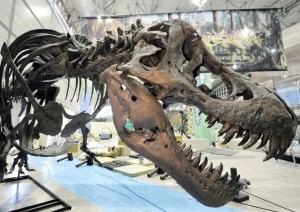
MEXICO: Scientists have used 142 teeth to identify six non-avian dinosaurs of the Upper Cretaceous period that existed in the South Pyrenees Basin in Spain.
Researchers examined one of the smallest parts of the fossil record – theropod teeth – to shed light on the evolution of dinosaurs at the end of the Cretaceous period.
You might also like


Findings have effectively quadrupled the dinosaur diversity in the Campanian-Maastrichtian of the South Pyrenean Basin in Spain. There were previously only two known species in the area, researchers said.
The study of 142 isolated teeth from the area suggests six additional species of toothed theropods (five small, one large) were present in the region.
“Studying these small parts helps us reconstruct the ancient world where dinosaurs lived and to understand how their extinction happened,” said lead author Angelica Torices, post-doctoral fellow in biological sciences at the University of Alberta.
“Teeth are especially important in the study of Upper Cretaceous creatures in Spain and the rest of Europe because we don’t have complete skeletons of theropods from that time in those locations,” Torices said.
“We have to rely on these small elements to reconstruct the evolution of these dinosaurs, particularly the theropods,” she said.
Carnivorous dinosaurs replaced their teeth continuously, with just one dinosaur producing a huge number of these dental pieces and an endless number of clues for understanding these mysterious creatures.
This study demonstrates the value of isolated teeth in reconstructing the composition of dinosaur paleofaunas when other, more complete material is not present, allowing interpretation of the evolution of diversity through time.