Customs Today
  • Home
  • Islamabad
  • Karachi
  • Lahore
  • National
  • Transfers and Postings
  • Chambers & Associations
  • Business
No Result
View All Result
Customs Today
  • Home
  • Islamabad
  • Karachi
  • Lahore
  • National
  • Transfers and Postings
  • Chambers & Associations
  • Business
No Result
View All Result
Customs Today
No Result
View All Result
Home Uncategorized

Scientists used 142 teeth to identify six non-avian dinosaurs

byCustoms Today Report
11/08/2015
in Uncategorized
Share on FacebookShare on Twitter

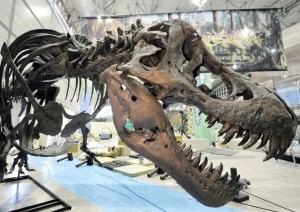
MEXICO: Scientists have used 142 teeth to identify six non-avian dinosaurs of the Upper Cretaceous period that existed in the South Pyrenees Basin in Spain.

Researchers examined one of the smallest parts of the fossil record – theropod teeth – to shed light on the evolution of dinosaurs at the end of the Cretaceous period.

You might also like

Pakistan to get $3b loan from Islamic Trade Financing Corporation

20/10/2024

Lahore I&I & Enforcement anti-smuggling operations achieve record success in early FY 2024-25

10/09/2024

Findings have effectively quadrupled the dinosaur diversity in the Campanian-Maastrichtian of the South Pyrenean Basin in Spain. There were previously only two known species in the area, researchers said.

The study of 142 isolated teeth from the area suggests six additional species of toothed theropods (five small, one large) were present in the region.

“Studying these small parts helps us reconstruct the ancient world where dinosaurs lived and to understand how their extinction happened,” said lead author Angelica Torices, post-doctoral fellow in biological sciences at the University of Alberta.

“Teeth are especially important in the study of Upper Cretaceous creatures in Spain and the rest of Europe because we don’t have complete skeletons of theropods from that time in those locations,” Torices said.

“We have to rely on these small elements to reconstruct the evolution of these dinosaurs, particularly the theropods,” she said.

Carnivorous dinosaurs replaced their teeth continuously, with just one dinosaur producing a huge number of these dental pieces and an endless number of clues for understanding these mysterious creatures.

This study demonstrates the value of isolated teeth in reconstructing the composition of dinosaur paleofaunas when other, more complete material is not present, allowing interpretation of the evolution of diversity through time.


Related Stories

Pakistan to get $3b loan from Islamic Trade Financing Corporation

byCT Report
20/10/2024

ISLAMABAD: Islamic Trade Financing Corporation (ITFC) to provide Pakistan with a $3 billion loan, according to an official statement released...

Lahore I&I & Enforcement anti-smuggling operations achieve record success in early FY 2024-25

byCT Report
10/09/2024

LAHORE:  Regional Directorate of Customs Intelligence & Investigation has demonstrated exceptional performance in the first two months of the fiscal...

ICCI and CDA to join hands for tree plantation drive in Capital

byQaisar Mansoor
09/08/2023

ISLAMABAD: Islamabad Chamber of Commerce and Industry (ICCI) in collaboration with the Capital Development Authority (CDA) would jointly launch a...

Customs Officials Yawar Abbas & Tariq Mehmood kidnapped in Karachi

byCT Report
08/07/2023

KARACHI: Customs Intelligence Officer Yawar Abbas and Customs Preventive Officer Tariq Mehmood who were working against smuggling were kidnapped by...

Next Post

New study shows eye geometry could offer more information about evolution

  • Terms and Conditions
  • Disclaimer

© 2011 Customs Today -World's first newspaper on customs. Customs Today.

No Result
View All Result
  • Transfers and Postings
  • Latest News
  • Karachi
  • Islamabad
  • Lahore
  • National
  • Chambers & Associations
  • Business
  • About Us

© 2011 Customs Today -World's first newspaper on customs. Customs Today.