

WASHINGTON: ESA’s Rosetta space craft which is orbiting a comet rode with it to its closest approach to the Sun, called perihelion, according to the European Space Agency. The exact moment of perihelion occurred at 02:03 GMT, that is, about 7:30 AM India time, this morning when the comet came within 186 million km of the sun.
In the year that has passed since Rosetta arrived, Comet 67P/Churyumov-Gerasimenko has travelled some 750 million kilometres along its orbit towards the sun, the increasing solar radiation heating up the nucleus and causing its frozen ices to escape as gas and stream out into space at an ever greater rate. These gases, and the dust particles that they drag along, build up the comet’s atmosphere – coma – and tail.
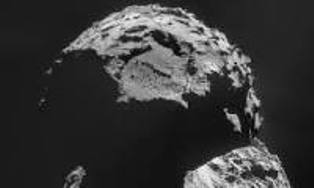
The activity reaches its peak intensity around perihelion and in the weeks that follow – and is clearly visible in the spectacular images returned by the spacecraft in the last months. One image taken by Rosetta’s navigation camera was acquired at 01:04 GMT, just an hour before the moment of perihelion, from a distance of around 327 km.
The scientific camera is also taking images today – the most recent available image was taken at 23:31 GMT on 12 August, just a few hours before perihelion. The comet’s activity is clearly seen in the images, with a multitude of jets stemming from the nucleus, including one outburst captured in an image taken at 17:35 GMT yesterday.
“Activity will remain high like this for many weeks, and we’re certainly looking forward to seeing how many more jets and outburst events we catch in the act, as we have already witnessed in the last few weeks,” says Nicolas Altobelli, acting Rosetta project scientist.

Karachi Port sets 138-year cargo handling record
KARACHI: Pakistan's maritime sector has achieved a major milestone as Karachi Port set a new record in its 138-year history...