Customs Today
  • Home
  • Islamabad
  • Karachi
  • Lahore
  • National
  • Transfers and Postings
  • Chambers & Associations
  • Business
No Result
View All Result
Customs Today
  • Home
  • Islamabad
  • Karachi
  • Lahore
  • National
  • Transfers and Postings
  • Chambers & Associations
  • Business
No Result
View All Result
Customs Today
No Result
View All Result
Home Science & Technology Science

Astronomers spotted Jupiter’s methane-shrouded cousin around distant star

byCustoms Today Report
17/08/2015
in Science, Science & Technology
Share on FacebookShare on Twitter

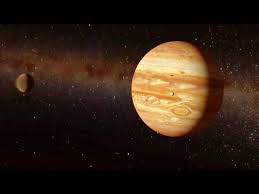
PERTH: Astronomers say they’ve spotted a remarkably close analogue to our own planet Jupiter — and even gotten a look at its methane-rich atmosphere.


Maybe our solar system isn’t such an oddball after all. As planet-hunting telescopes have scanned the starry heavens, they’ve discovered all kinds of strange worlds that are unlike those in our own solar neighborhood: hot Jupiters, super-Earths, mini-Neptunes. But now, astronomers say they’ve spotted a remarkably close analogue to our own planet Jupiter — and even gotten a look at its methane-rich atmosphere.

You might also like

Karachi Port sets 138-year cargo handling record

17/07/2026

Tesla driverless system to use updated radar technology

12/09/2016

The planet, 51 Eridani b, was the first to be found using the Gemini Planet Imager. The discovery, described in the journal Science, could give researchers deeper insight into the makeup of such exoplanets — as well as a potential glimpse into the evolution of our own solar system.
“It really, as far as we can tell, is pretty much like what Jupiter looked like at that age,” study leader Bruce Macintosh, an astronomer at Stanford University, said of the young planet. “And by studying the light from it … we can hope to understand the process that made it form.”

The gas giant’s star, 51 Eridani, sits about 100 light-years away in the constellation Eridanus (nearby Orion). The planet is thought to hold roughly twice the mass of our own one-eyed Jupiter and lies a little farther out, past where Saturn would sit.

Its atmosphere holds water vapor and gives off the strongest methane signature yet detected on an exoplanet. (Jupiter also features methane and water vapor in its atmosphere.)

Astronomers have discovered many other gas giant planets — particularly with NASA’s Kepler spacecraft, which has turned up more than 1,000 confirmed exoplanets of all types and sizes — but those behemoths tend to be very close to their host star. That’s very different from the planets around our home star, where the small, rocky ones stay close to the sun and the large, gassy ones fill up far more distant orbits.


Related Stories

Karachi Port sets 138-year cargo handling record

byCT Report
17/07/2026

KARACHI: Pakistan's maritime sector has achieved a major milestone as Karachi Port set a new record in its 138-year history...

Tesla driverless system to use updated radar technology

byCT Report
12/09/2016

WASHINGTON: Electric carmaker Tesla announced Sunday it was upgrading its Autopilot software to use more advanced radar technology. In a...

Apple to develop its own self-driving technology

byCT Report
10/09/2016

SAN FRANCISCO: Apple may not become an automaker, but it still wants to develop its own self-driving technology. The iPhone-maker's...

NASA spots slowest known magnetar

byCT Report
10/09/2016

WASHINGTON: Astronomers have found evidence of a magnetar - magnetised neutron star - that spins much slower than the slowest...

Next Post

NASA's New Horizons spacecraft expose diverse features on Pluto's surface

  • Terms and Conditions
  • Disclaimer

© 2011 Customs Today -World's first newspaper on customs. Customs Today.

No Result
View All Result
  • Transfers and Postings
  • Latest News
  • Karachi
  • Islamabad
  • Lahore
  • National
  • Chambers & Associations
  • Business
  • About Us

© 2011 Customs Today -World's first newspaper on customs. Customs Today.