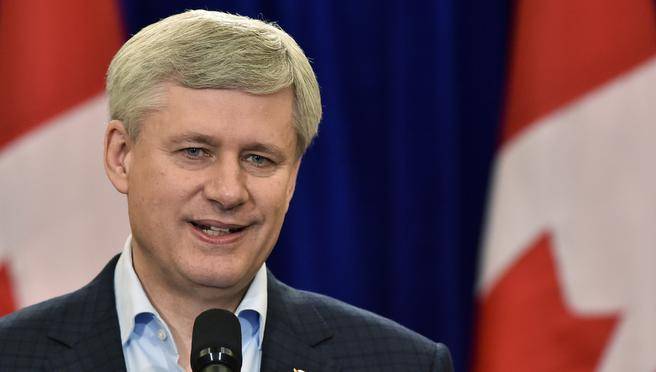

OTTAWA: Canadian Prime Minister Stephen Harper hailed a trade agreement with 11 other Pacific countries as a boon to job creation and economic growth. But as a national election looms, the deal’s ratification by Canadian lawmakers is uncertain.
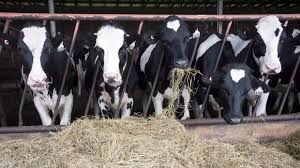
The Trans-Pacific Partnership would give Canada’s exporters greater access to number of fast-growing Pacific-rim economies for products including machinery, beef and pork, grains and forest products, while protecting Canadian interests, the prime minister said in Ottawa. He pointed to the deal’s dairy-sector provisions, which keep Canadian farmers’ highly protected business model intact while granting limited foreign access to the Canadian market. Dairy- market access had been one of the trade deal’s most contentious issues.
“This is a once-in-a-lifetime agreement, and a once-in-a-lifetime moment of decision,” Mr. Harper said. “You are either in or out. We choose to be in because there’s too much for gain.”
For Mr. Harper, who is seeking a fourth mandate from Canadian voters in an Oct. 19 election, the historic accord marked a success for his pro-trade agenda. Mr. Harper’s bid for re-election has faced stiff headwinds from a sputtering economy that has taken a hit from lower prices for oil and other commodities that Canada exports.
Polls indicate that Mr. Harper’s Conservative Party could end up with the most elected members in Canada’s parliament–but not necessarily a majority, meaning the party would have to seek the support of other parties on key bills. Canada’s two main opposition parties have said they wouldn’t prop up a Conservative minority government, and their support for the TPP is either lukewarm or hostile. The Liberal Party, which polls either have in the top spot or second place, vowed to consult widely before indicating its support for the trade deal.
The left-leaning New Democratic Party opposed it. Leader Tom Mulcair said Monday that the Conservative government ” is putting in danger” auto-sector jobs and threatening the livelihood of Canadian dairy farmers by supporting the deal.
Eurasia Group, a Washington-based geopolitical consultancy, said in a note to clients that Canada’s ratification of the TPP “hinges on whether Mr. Harper is re-elected. If not, Canada’s participation will be thrown into question.”
The deal opens up Canada’s tightly controlled dairy and poultry market with “limited new access” to overseas producers. Under the agreement, Canada will allow other TPP countries duty-free access to 3.25% of its dairy market and 2.1% of its chicken market. To ease the adjustment, the Canadian government will compensate dairy and poultry farmers with 4.3 billion Canadian dollars ($3.3 billion) over 15 years.
“We obviously would have preferred that no additional market access be conceded in the dairy sector,” said Wally Smith, president of the Dairy Farmers of Canada.
The agreement is likely to benefit Canadian grain and cattle farmers. Japan and Vietnam agreed to eliminate tariffs on beef and pork products over the next 15 years while relaxing quotas for Canadian wheat, barley and canola.
Canada also agreed to phase out its 6.1% tariff on imports of Japanese-made cars and parts over five years, a concession which is far less than the 25 yearlong phaseout for Japanese imports into the U.S. Also, the deal set domestic content levels for auto-parts manufacturers at 45% of TPP-originating content, down from the 60% requirement under the North American Free Trade Agreement. Canada had sought to set the threshold for TPP-based components in cars at a minimum of 50%, an increase from the 40% limit that the U.S. and Japan negotiated in a side deal back in July.
Flavio Volpe, president of Canada’sAutomotive Parts Manufacturers Association, said it was “too early to tell” if the TPP deal would lead to job losses, but he said the group was worried about the future of small-and-medium sized car- parts makers.
Mr. Harper said the deal would ultimately prove to be a boon for Canada’s auto sector, adding he would soon announce new funding to attract auto investment to Canada and to ensure the future of the country’s auto assembly plants.
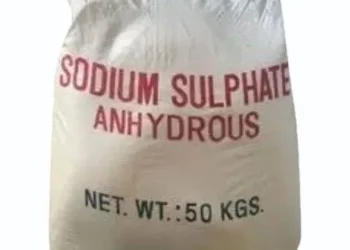
FBR revises customs values of sodium sulphate anhydrous vide VR No.2107/2026
ISLAMABAD: FBR has revised customs values for imported sodium sulphate anhydrous, replacing valuation rules that had been in force for...