

OTTAWA: Canada is joining a massive Pacific Rim free-trade zone, but has sacrificed some long-held protections for the country’s dairy, poultry and auto industries to gain entry.
Negotiators for the 12 members of the Trans-Pacific Partnership struck a tentative deal in Atlanta early Monday morning that will eliminate most tariffs in a region spanning roughly 40 per cent of the global economy.
But that will come at a hefty price for some sectors, and for taxpayers.
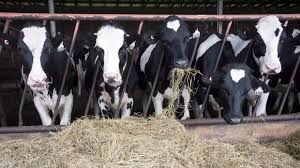
Ottawa said it will spend $4.3-billion over 15 years to compensate dairy, chicken and egg farmers, who are ceding what Canadian officials called “limited access” to their now highly protected markets under the TPP deal and the earlier free trade deal with Europe. The subsidies will “keep producers whole,” according to a government press release.
The deal, originally slated to be announced Friday, was delayed several times over the weekend as countries haggled over last-minute details on autos and patent protection for drugs and agricultural products.
Canadian officials said a text of the tentative agreement would likely be released in the next few days. The final legal text is expected to take longer to complete.
“Ten years from now, I predict, with 100-per-cent certainty, that if people are looking back, and we got in it, they will say ‘It’s a great thing,’” he told reporters in Ottawa. “And if we haven’t, they will say ‘It was a terrible error.’”
Canada will give other TPP countries duty-free access to 3.25 per cent of its dairy market and 2.1 per cent of its poultry market. The new imports are expected to come mainly from the U.S., Australia and New Zealand.
Typical dairy farmers, who are heavily concentrated in Quebec and Ontario, stand to pocket $165,000 under the bailout package. Farmers in the so-called supply managed sectors – dairy, chicken and eggs – are currently not subsidized in Canada. But consumers typically pay prices that are higher than they are in much of the world.
Ottawa also announced that it will toughen up border controls to ensure that foreign countries don’t try to get around the massive tariff wall that protects Canada’s supply-managed farm products. Officials insist that the “pillars” of the regime will remain in place even after the TPP goes into effect.
In addition to the concessions in agriculture, the TPP will also reduce some of the protection now provided to the Canadian auto industry. Canada’s 6.1-per-cent tariff on imported vehicles will be phased out over five years. And domestic-content requirements for autos will be slashed from the 60 per cent now required under the North American free-trade agreement.
Vehicles and certain high-value auto parts will be protected by a 45-per-cent domestic content requirement. All other parts will only need to contain 40-per-cent domestic content.
Small auto-parts makers have warned that the change could put at risk thousands of jobs in Ontario, as auto makers use more parts imported from other TPP countries, including Japan, Malaysia and Vietnam.
“We don’t anticipate that there will be job losses [from the TPP deal],” Trade Minister Ed Fast told reporters in Atlanta, though he acknowledged some sectors will have to adapt.
Federal officials said Canada has also secured special “snap-back” protections on cars that will last for six years after tariffs are eliminated. This will allow Canada to re-impose duties if Japanese auto makers are failing to comply with the new content rules.
The most obvious export winners are beef, barley, pork, fish and canola exporters, who are getting better access to the huge but highly protected Japanese market, as well as to fast-growing Vietnam and Malaysia. All three countries have agreed to substantially cut their tariffs on most agricultural products over 10 to 15 years.
The tentative agreement must still be ratified by legislatures in TPP countries.
NDP Leader Thomas Mulcair, who spent most of Sunday panning the deal, confirmed on Monday that a government led by his party would not be bound by the terms of the TPP.
Passage is also uncertain in the U.S. Congress, which has limited time to ratify the deal as the clock ticks down to next fall’s U.S. election.
Canada had strong defensive reasons for wanting into the TPP. If it didn’t join, the U.S., Mexico, Australia and other countries would have secured privileged access to the massive Japanese market in particular.
Canadian officials said exporters will enjoy significant tariff reductions, not just in Japan, but also in fast-growing Vietnam and Malaysia for a wide range of commodities as well as consumer and industrial goods.
The TPP member countries are Canada, the U.S., Mexico, Japan, Australia, New Zealand, Vietnam, Malaysia, Peru, Chile, Singapore and Brunei.
The North American Free Trade Agreement between Canada, the United States and Mexico mandates that vehicles have a local content of 62.5 per cent. It has been credited with driving a boom in auto-related investment in Mexico.
The TPP would give Japan’s automakers, led by Toyota Motor Corp., a freer hand to buy parts from Asia for vehicles sold in the United States but sets long phase-out periods for U.S. tariffs on Japanese cars and light trucks.
The TPP deal also sets minimum standards on issues ranging from workers’ rights to environmental protection. It also sets up dispute settlement guidelines between governments and foreign investors separate from national courts.

PIA launches special discount on flights to Toronto
ISLAMABAD: Pakistan International Airlines (PIA) has announced a 30% discount on flights from Pakistan to Toronto, Canada, for travel until...