Customs Today
  • Home
  • Islamabad
  • Karachi
  • Lahore
  • National
  • Transfers and Postings
  • Chambers & Associations
  • Business
No Result
View All Result
Customs Today
  • Home
  • Islamabad
  • Karachi
  • Lahore
  • National
  • Transfers and Postings
  • Chambers & Associations
  • Business
No Result
View All Result
Customs Today
No Result
View All Result
Home Science & Technology Science

Sunscreen is destroying the planet’s corals, research

byCustoms Today Report
22/10/2015
in Science, Science & Technology
Share on FacebookShare on Twitter

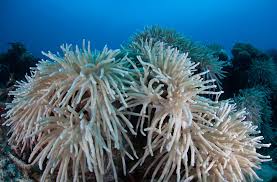
PARIS: New research by Israeli-American researchers has shown that sunscreen is destroying the planet’s corals and coral reefs.

According to the collaborative study, oxybenzone – a common chemical found in popular sunscreen brands that protects the wearer from the harmful effects of UV rays – is irreversibly damaging the genetic structure of the coral and turning it brittle and white.


You might also like

Tesla driverless system to use updated radar technology

12/09/2016

Apple to develop its own self-driving technology

10/09/2016

Sunscreen is today promoted as the best way to keep skin cancer at bay while in the sun, but a joint study by Tel Aviv University, Ben Gurion University of the Negev, Haereticus Environmental Laboratory in Virginia, US National Aquarium, US National Oceanic & Atmospheric Administration, and other American labs, now shows that it is toxic to undersea ecosystems.

“The chemical, oxybenzone (benzophenone-3), is found in more than 3,500 sunscreen products worldwide, including mascara, lipstick and shampoo. It pollutes coral reefs via swimmers who wear sunscreen or wastewater discharges from municipal sewage outfalls [after sunscreen is washed off in a shower] and coastal septic systems,” said Dr. Omri Bronstein of TAU’s Department of Zoology, one of the principal researchers.

“We found the lowest concentration to see a toxicity effect was 62 parts per trillion — equivalent to a drop of water in six and a half Olympic-sized swimming pools.”

The study — recently published in the journal, Archives of Environmental Contamination and Toxicology – showed that when oxybenzone was released into the water, the coral’s genetic structure was damaged and it turned brittle and white.


Related Stories

Tesla driverless system to use updated radar technology

byCT Report
12/09/2016

WASHINGTON: Electric carmaker Tesla announced Sunday it was upgrading its Autopilot software to use more advanced radar technology. In a...

Apple to develop its own self-driving technology

byCT Report
10/09/2016

SAN FRANCISCO: Apple may not become an automaker, but it still wants to develop its own self-driving technology. The iPhone-maker's...

NASA spots slowest known magnetar

byCT Report
10/09/2016

WASHINGTON: Astronomers have found evidence of a magnetar - magnetised neutron star - that spins much slower than the slowest...

‘YouTubers’ outshining old-school television

byCT Report
09/08/2016

SAN FRANCISCO: A media revolution is taking place, and most people over 35 years of age aren’t tuned in. Millennial...

Next Post

HCM Stock Exchange edges down 0.04% at closing time

  • Terms and Conditions
  • Disclaimer

© 2011 Customs Today -World's first newspaper on customs. Customs Today.

No Result
View All Result
  • Transfers and Postings
  • Latest News
  • Karachi
  • Islamabad
  • Lahore
  • National
  • Chambers & Associations
  • Business
  • About Us

© 2011 Customs Today -World's first newspaper on customs. Customs Today.