Customs Today
  • Home
  • Islamabad
  • Karachi
  • Lahore
  • National
  • Transfers and Postings
  • Chambers & Associations
  • Business
No Result
View All Result
Customs Today
  • Home
  • Islamabad
  • Karachi
  • Lahore
  • National
  • Transfers and Postings
  • Chambers & Associations
  • Business
No Result
View All Result
Customs Today
No Result
View All Result
Home Science & Technology Science

Sunscreen is destroying the planet’s corals, research

byCustoms Today Report
22/10/2015
in Science, Science & Technology
Share on FacebookShare on Twitter

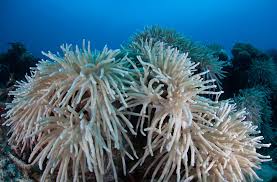
PARIS: New research by Israeli-American researchers has shown that sunscreen is destroying the planet’s corals and coral reefs.

According to the collaborative study, oxybenzone – a common chemical found in popular sunscreen brands that protects the wearer from the harmful effects of UV rays – is irreversibly damaging the genetic structure of the coral and turning it brittle and white.


You might also like

Karachi Port sets 138-year cargo handling record

17/07/2026

Tesla driverless system to use updated radar technology

12/09/2016

Sunscreen is today promoted as the best way to keep skin cancer at bay while in the sun, but a joint study by Tel Aviv University, Ben Gurion University of the Negev, Haereticus Environmental Laboratory in Virginia, US National Aquarium, US National Oceanic & Atmospheric Administration, and other American labs, now shows that it is toxic to undersea ecosystems.

“The chemical, oxybenzone (benzophenone-3), is found in more than 3,500 sunscreen products worldwide, including mascara, lipstick and shampoo. It pollutes coral reefs via swimmers who wear sunscreen or wastewater discharges from municipal sewage outfalls [after sunscreen is washed off in a shower] and coastal septic systems,” said Dr. Omri Bronstein of TAU’s Department of Zoology, one of the principal researchers.

“We found the lowest concentration to see a toxicity effect was 62 parts per trillion — equivalent to a drop of water in six and a half Olympic-sized swimming pools.”

The study — recently published in the journal, Archives of Environmental Contamination and Toxicology – showed that when oxybenzone was released into the water, the coral’s genetic structure was damaged and it turned brittle and white.


Related Stories

Karachi Port sets 138-year cargo handling record

byCT Report
17/07/2026

KARACHI: Pakistan's maritime sector has achieved a major milestone as Karachi Port set a new record in its 138-year history...

Tesla driverless system to use updated radar technology

byCT Report
12/09/2016

WASHINGTON: Electric carmaker Tesla announced Sunday it was upgrading its Autopilot software to use more advanced radar technology. In a...

Apple to develop its own self-driving technology

byCT Report
10/09/2016

SAN FRANCISCO: Apple may not become an automaker, but it still wants to develop its own self-driving technology. The iPhone-maker's...

NASA spots slowest known magnetar

byCT Report
10/09/2016

WASHINGTON: Astronomers have found evidence of a magnetar - magnetised neutron star - that spins much slower than the slowest...

Next Post

HCM Stock Exchange edges down 0.04% at closing time

  • Terms and Conditions
  • Disclaimer

© 2011 Customs Today -World's first newspaper on customs. Customs Today.

No Result
View All Result
  • Transfers and Postings
  • Latest News
  • Karachi
  • Islamabad
  • Lahore
  • National
  • Chambers & Associations
  • Business
  • About Us

© 2011 Customs Today -World's first newspaper on customs. Customs Today.