

BEIJING: China’s central bank has announced plans to extend trading hours in the mainland market for the yuan, in a bid to boost the status of the Chinese currency.
As of Jan. 4, the hours for buying and selling the yuan in mainland markets will be extended from 4.30 p.m. to 11.30 p.m. Beijing time.
This means trade in the yuan overlaps with business hours in Europe and Africa, where China is making strides in expanding use of its currency.
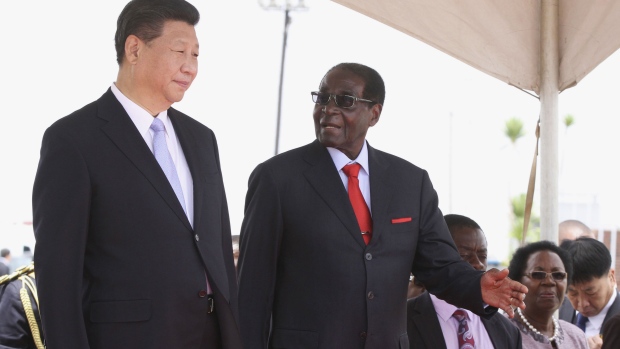
Zimbabwe announced earlier this week it would adopt the renminbi as an official currency after China forgave $40 million US in Zimbabwean debt.
Zimbabwe officially abandoned its own currency in 2009 because of hyperinflation and has used a basket of currencies, mainly the U.S. dollar and the South African rand.
After years of sanctions because its human rights record, Zimbabwean government has embraced its relationship with China, which is now its biggest trading partner.
Zimbabwe finance minister Patrick Chinamasa said the central bank is in talks with the Peoples’ Bank of China to add the yuan to its basket of accepted currencies.
China is increasing its influence across Africa by developing resources and opening businesses, as well as becoming an important trading partner.
London and the yuan
The IMF has agreed to admit the yuan to its basket of reserve currencies, one of China’s key ambitions.
London, which handles 40 per cent of global currency transactions, is already a yuan trading hub and has plans to grab a major share of offshore renminbi trading.
The longer trading hours in Beijing mean the mainland market is open to trade to 3.30 p.m. GMT (London time).
China’s central bank will still set the value of the yuan for trading the following day at 4.30 Beijing time.
However, the government has pledged to make the currency, which has until recently traded in a narrow band pegged to the U.S. dollar, more market-oriented.
On Dec. 12, China said it would stop pegging the yuan solely to the dollar and instead tie it to a basket of currencies that include the yen and the British pound.
The move came ahead of the U.S. Fed raising interest rates, a factor that could have boosted the value of the yuan and made it more difficult for China to export its goods.

FCCI top office-bearers set for unopposed election
FAISALABAD: The election process of the Faisalabad Chamber of Commerce & Industry (FCCI) has entered its final stage after the...