
Customs Today
  • Home
  • Islamabad
  • Karachi
  • Lahore
  • National
  • Transfers and Postings
  • Chambers & Associations
  • Business
No Result
View All Result
Customs Today
  • Home
  • Islamabad
  • Karachi
  • Lahore
  • National
  • Transfers and Postings
  • Chambers & Associations
  • Business
No Result
View All Result
Customs Today
No Result
View All Result
Home International Customs Indonesia

Indonesia may abolish licensing system for onion & chilli imports

byCT Report
26/10/2016
in Indonesia, Latest News
Share on FacebookShare on Twitter

JAKARTA: A government official in Indonesia reported Tuesday 25 Oct., that the country may abolish the licensing system for importers of some food commodities and put in place a tariff system in order to open its economy.

“At this moment, we are reviewing the trade regime for important commodities such as rice, sugar, beef, chillies, onions and two other commodities,” Denni Purbasari, deputy chief of staff at the executive office of the president, said during the launch of the World Bank’s Indonesia Economic Quarterly report.

You might also like

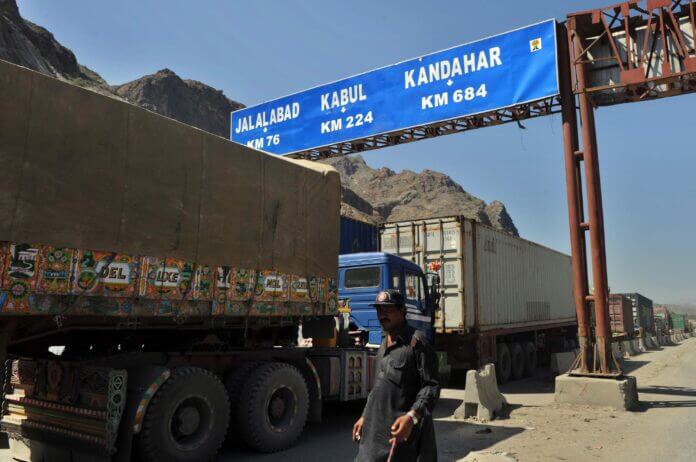
New transit framework with Iran to position Pakistan as regional trade hub: ICCI

28/04/2026

Pakistan not seeking new financing from friendly countries: Aurangzeb

28/04/2026

“We are looking at the possibility of changing from licensing regime to tariffs, such that everybody can play to import the commodities,” she said.

Indonesia’s food trade restrictions and other policy interventions impose a massive “tax” on consumers, the World Bank said in the report.

In 2015, the cost burden from the system on Indonesian consumers was estimated at $36 billion, much higher than the $22 billion estimate for the entire European Union, the report said.

Currently, the Indonesian government has a quota system for the import of food commodities it considers important. Only the state procurement agency Bulog is allowed to import non-premium rice. Importation of white sugar is limited to state-owned companies appointed by the government.

The import quota is decided, based on domestic food production data, compiled by the Agriculture Ministry. But ministry officials routinely inflate the rice production data to present a rosy picture to the government to keep farm subsidies flowing, a senior government official told Reuters earlier this year.

The World Bank said Indonesia needs to rebalance its food security policy, highlighting, not only the trade barriers on some commodities, but also the government’s approach on public spending to increase productivity.

Related Stories

New transit framework with Iran to position Pakistan as regional trade hub: ICCI

byCT Report
28/04/2026

ISLAMABAD: Islamabad Chamber of Commerce and Industry (ICCI), has warmly welcomed the federal government’s recent decision to facilitate the transit...

Pakistan not seeking new financing from friendly countries: Aurangzeb

byCT Report
28/04/2026

SLAMABAD: Federal Minister for Finance and Revenue Senator Mohammad Aurangzeb has said that Pakistan has no intention to seek new...

Pakistani seafarers set sail on Norwegian-flagged ships under fresh MoU: Junaid Anwar Chaudhry

byCT Report
28/04/2026

ISLAMABAD: Federal Minister for Maritime Affairs Muhammad Junaid Anwar Chaudhry welcomed the signing of a memorandum of understanding (MoU) with...

PRA chairman reviews service sector’s revenue targets

byCT Report
28/04/2026

LAHORE: Punjab Revenue Authority Chairman Moazzam Iqbal Sipra chaired a meeting to review progress on revenue targets from the services...

Next Post

Customs Valuation issues latest values of olives

  • Terms and Conditions
  • Disclaimer

© 2011 Customs Today -World's first newspaper on customs. Customs Today.

No Result
View All Result
  • Transfers and Postings
  • Latest News
  • Karachi
  • Islamabad
  • Lahore
  • National
  • Chambers & Associations
  • Business
  • About Us

© 2011 Customs Today -World's first newspaper on customs. Customs Today.