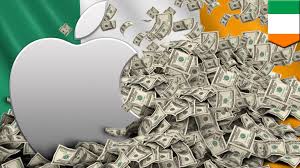
DUBLIN: The Irish Government weighed in with Apple, pledging to appeal the decision. Heading into 2017, both Apple and the Irish Government say that they are confident of succeeding in their appeal. At the heart of the case is whether, or to what degree, the European Commission can adjudicate on member states’ fiscal processes.
By design, the EU has no say in national tax rates. But in this case, the European Commission said Ireland’s tax “arrangement” with Apple was really a form of state aid because the terms were so favourable to the tech giant.


It said Apple got a tax rate as low as 0.005pc some years, although this was strongly disputed by Apple. State aid to companies is usually illegal under EU law and, if such aid is established, the European Commission is entitled to intervene.
Most commentators agreed that there were political overtones to the case. Resentment about big companies avoiding tax has been brewing for some time, both in Europe and in the US. When Apple sells an iPhone in Britain or Germany, its accountants mark it down as money in its Irish accounts- but it doesn’t declare profits here on most of that money.
The Irish Government accepts this because the phones are designed in the US and made in China. The same goes for a lot of its other products and services sold in the EU. The problem is that there’s a huge chunk of money that Apple hasn’t yet paid tax on. The European Commission says that’s not acceptable and that it should pay tax on all that money in the EU, preferably Ireland. But Apple says that profit may ultimately be taxed in the US, where its products are designed.
The company says it is waiting for tax reform in the US before it “repatriates” its profits there.
Like other multinational firms, Apple is largely able to do this due to international tax law, which has a lot of mechanisms that allow corporations to legally avoid tax for a long time. The election of Donald Trump may have a bearing on this. He has said that he will be more aggressive with US companies that continue to hold large sums of money offshore. Most financial observers expect the US to introduce some form of one-off tax measure in 2017 that will allow US companies to repatriate their profits without incurring the full tax rate.
The Government believes that the stakes for Ireland are high. It judges that Ireland’s reputation among inward investors such as Apple, Google, Microsoft and others is more important than a single €13bn windfall. So far, its message appears to be working, with Apple reiterating its support for continued expansion in Cork. “We are committed to Ireland and we plan to continue investing there, growing and serving our customers with the same level of passion and commitment,” Tim Cook said in September.