Customs Today
  • Home
  • Islamabad
  • Karachi
  • Lahore
  • National
  • Transfers and Postings
  • Chambers & Associations
  • Business
No Result
View All Result
Customs Today
  • Home
  • Islamabad
  • Karachi
  • Lahore
  • National
  • Transfers and Postings
  • Chambers & Associations
  • Business
No Result
View All Result
Customs Today
No Result
View All Result
Home Latest News

Russian energy ministry tax change could boost oil output

byCT Report
19/04/2018
in Latest News
Share on FacebookShare on Twitter

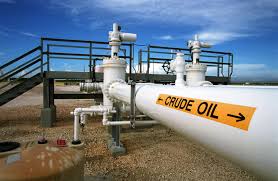
MOSCOW: The Russian energy ministry has proposed changes to a draft oil production law that it says could boost production by around 900,000 tonnes per year, First Deputy Energy Minister Alexei Texler said on Wednesday.

Debate about the law has dragged on for years, as the Finance Ministry expressed concerns the changes could reduce state revenues.


You might also like

Pakistan’s rice exports reach 1.35 million tonnes as Basmati shipments rise 62%

23/11/2026

Sri Lanka invites Pakistani exporters to tap into $19b import market

23/11/2026

Oilfields, especially in West Siberia, have become increasingly depleted and the new tax regime is seen as an incentive to produce more oil in a country which is heavily dependent on sales of energy for state revenue.

Russia’s parliament has approved the new profit-based tax on the oil industry on a first reading. Currently, taxes are based on production – via a mineral extraction tax – and exports.

 The new tax will initially cover four groups of oilfields, including new deposits in far-flung regions of East Siberia, fields which enjoy a lower export duty, and some highly-depleted fields in West Siberia.

The new taxes, at least on an initial stage, will be applicable to only limited number of fields, depending on how big their reserves are.

 Texler said the ministry had proposed increasing quotas for the groups of oilfields eligible for the new tax from 50 million tonnes of reserves to 150 million tonnes, and the changes would be debated in the second, crucial, reading.

In addition, the new proposal would raise the limits for a single oilfield, to which the new taxation could be applicable, to 20-30 million tonnes of reserves from 10 million tonnes to increase the scope for the taxation.

The proposals would boost production of oil by 900,000 tonnes per year (18,000 bpd), Texler said. He didn’t say, to which level. The law is expected to be implemented starting from 2019.

A forecast published in September by the economy ministry, saw Russian oil production rising to 553 million tonnes per year in 2019-2020


Related Stories

Pakistan’s rice exports reach 1.35 million tonnes as Basmati shipments rise 62%

byCT Report
23/11/2026

ISLAMABAD: Pakistan's rice exports increased by 353,000 tonnes during the first four months of fiscal year 2026-27, reaching 1.351 million...

Sri Lanka invites Pakistani exporters to tap into $19b import market

byCT Report
23/11/2026

KARACHI: Sri Lankan Consul General in Karachi Sanjeewa Pattiwilla urged Pakistani exporters to expand their presence in Sri Lanka’s nearly...

Pakistan, Portugal agree to establish joint trade, investment commission

byCT Report
23/11/2026

ISLAMABAD: Pakistan and Portugal have agreed to establish a Joint Ministerial Commission to strengthen trade, investment and economic cooperation, as...

Pakistan-Iran FTA expected to be finalised by March 2027, says Iranian official

byCT Report
23/11/2026

TEHRAN: Pakistan and Iran are moving closer to a comprehensive free trade agreement that could reduce customs costs and expand...

Next Post

VAT relief for gold on cards in UAE

  • Terms and Conditions
  • Disclaimer

© 2011 Customs Today -World's first newspaper on customs. Customs Today.

No Result
View All Result
  • Transfers and Postings
  • Latest News
  • Karachi
  • Islamabad
  • Lahore
  • National
  • Chambers & Associations
  • Business
  • About Us

© 2011 Customs Today -World's first newspaper on customs. Customs Today.