Customs Today
  • Home
  • Islamabad
  • Karachi
  • Lahore
  • National
  • Transfers and Postings
  • Chambers & Associations
  • Business
No Result
View All Result
Customs Today
  • Home
  • Islamabad
  • Karachi
  • Lahore
  • National
  • Transfers and Postings
  • Chambers & Associations
  • Business
No Result
View All Result
Customs Today
No Result
View All Result
Home Latest News

Russian energy ministry tax change could boost oil output

byCT Report
19/04/2018
in Latest News
Share on FacebookShare on Twitter

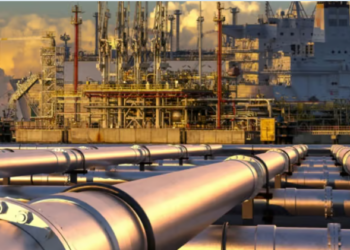
MOSCOW: The Russian energy ministry has proposed changes to a draft oil production law that it says could boost production by around 900,000 tonnes per year, First Deputy Energy Minister Alexei Texler said on Wednesday.

Debate about the law has dragged on for years, as the Finance Ministry expressed concerns the changes could reduce state revenues.

You might also like

PIAF welcomes Rs200b tariff relief, calls for comprehensive industrial reforms

01/06/2026

FBR recovers Rs4m from Cheezious in tax compliance action

01/06/2026

Oilfields, especially in West Siberia, have become increasingly depleted and the new tax regime is seen as an incentive to produce more oil in a country which is heavily dependent on sales of energy for state revenue.

Russia’s parliament has approved the new profit-based tax on the oil industry on a first reading. Currently, taxes are based on production – via a mineral extraction tax – and exports.

 The new tax will initially cover four groups of oilfields, including new deposits in far-flung regions of East Siberia, fields which enjoy a lower export duty, and some highly-depleted fields in West Siberia.

The new taxes, at least on an initial stage, will be applicable to only limited number of fields, depending on how big their reserves are.

 Texler said the ministry had proposed increasing quotas for the groups of oilfields eligible for the new tax from 50 million tonnes of reserves to 150 million tonnes, and the changes would be debated in the second, crucial, reading.

In addition, the new proposal would raise the limits for a single oilfield, to which the new taxation could be applicable, to 20-30 million tonnes of reserves from 10 million tonnes to increase the scope for the taxation.

The proposals would boost production of oil by 900,000 tonnes per year (18,000 bpd), Texler said. He didn’t say, to which level. The law is expected to be implemented starting from 2019.

A forecast published in September by the economy ministry, saw Russian oil production rising to 553 million tonnes per year in 2019-2020

Related Stories

PIAF welcomes Rs200b tariff relief, calls for comprehensive industrial reforms

byCT Report
01/06/2026

LAHORE: The Pakistan Industrial and Traders Associations Front (PIAF) has welcomed the government’s decision to provide approximately Rs200 billion in...

FBR recovers Rs4m from Cheezious in tax compliance action

byCT Report
01/06/2026

SAHIWAL: The Federal Board of Revenue (FBR) has recovered Rs. 4 million from popular fast-food chain Cheezious following an enforcement...

FBR revenue shortfall swells to Rs868b as tax collection misses target

byCT Report
01/06/2026

ISLAMABAD: The Federal Board of Revenue (FBR) recorded a revenue gap of Rs868 billion during the first 11 months of...

Pakistan likely to allocate Rs1,126b for development projects in budget 2026-27

byCT Report
01/06/2026

ISLAMABAD: Pakistan is expected to allocate around Rs1,126 billion for development projects in the upcoming federal budget 2026–27, according to...

Next Post

VAT relief for gold on cards in UAE

  • Terms and Conditions
  • Disclaimer

© 2011 Customs Today -World's first newspaper on customs. Customs Today.

No Result
View All Result
  • Transfers and Postings
  • Latest News
  • Karachi
  • Islamabad
  • Lahore
  • National
  • Chambers & Associations
  • Business
  • About Us

© 2011 Customs Today -World's first newspaper on customs. Customs Today.