In 1952, Denmark, Sweden, Norway and Finland agreed passport-free travel between their countries. They added the rights to reside and work in 1954 and to claim social security the following year. In 1957, they formalised this in a treaty creating the Nordic Passport Union, with a common external immigration frontier. In 1962, an associated treaty was signed for political co-operation via the Nordic Council. Iceland joined in 1966. A customs union, defence union and single market were discussed.
The rise of wider European integration eventually caused the project to lose focus. However, the Nordic Passport Union remains a significant and valued connection between its members. They have maintained it through the complications and redundancies arising from their various partial overlaps with the European Union’s single market, customs union and passport-free Schengen zone. I will spare you a description of where the Faroe Islands fit into this, as that really requires a Venn diagram.


Common Travel Area
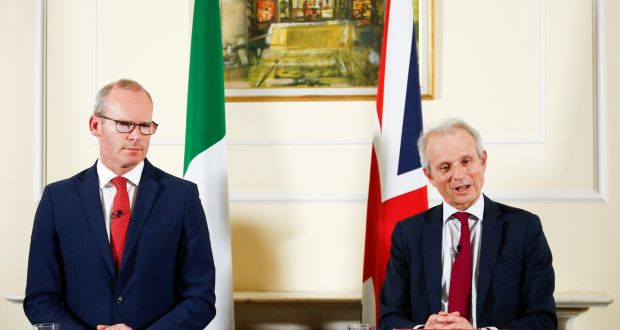
Contrast the hopes vested in the Nordic project, at least in its early years, with the shrug that greeted last week’s memorandum between the British and Irish governments to formalise the Common Travel Area (CTA), following two years of joint work.
Tánaiste Simon Coveney and David Lidington, the UK’s de facto deputy prime minister, pledged to create statutory rights for each other’s citizens to move freely, reside, work and study, and also to claim benefits, pensions and healthcare. Coveney referenced the implication of a common immigration policy and both governments guaranteed all rights and freedoms against any Brexit outcome.
These are extraordinarily intimate connections. If any other two countries were embarking on such a project from scratch there would be excitable comparisons not just with the Nordic Passport Union but with the Benelux treaties to create an economic union of Belgium, the Netherlands and Holland, or even with the founding of the EU itself.
Co-operation on this scale always has a vision, explicit or implicit, of forward momentum. It develops institutions, such as the Nordic Council, that naturally seek to expand their role.
We may believe the new CTA project is different or mundane because it merely seeks to formalise a century of convention, the purpose of which was not ‘ever closer union’ but smoothing the end of the union of the United Kingdom, through a patchwork of casual understandings.
Brexit has made that approach too complicated to be sustainable. Coveney and Lidington both said the goal of formalisation is that “nothing will change” – the CTA as it is currently assumed to operate will now be chiselled in legal stone.