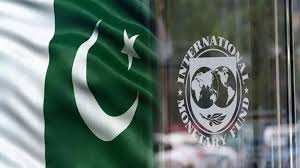
ISLAMABAD: The International Monetary Fund (IMF) wants Pakistan to provide subsidies only to the people who need them, saying that the resources should be diverted from the rich and wealthy towards the poor segments of society
The comments came from the Fund’s Managing Director Kristalina Georgieva while speaking in an interview with an international broadcaster.


Georgieva said that the global lender asks Pakistan to take steps to be able to function as a country and not to get into a dangerous place where it needs debt restructuring.
“My heart goes to the people of Pakistan. They have been devastated by the floods that affected one-third of the population of the country,” said the managing director.
“We are emphasising two things: one raising tax revenues, as those who are making good money in public or private sectors need to contribute to the economy. Number two is to have a fairer distribution of precious resources by moving subsidies only towards the people who really need them. It shouldn’t be that the wealthy benefit from subsidies. It should be the poor [who] benefit from them,” she said.
“And there the Fund is very clear. We want the poor people of Pakistan to be protected.”
Sources told that in background discussions that the IMF could help Islamabad overcome its looming balance of payment (BoP) crisis only by ensuring that the country remains able to pay its debt obligations without plunging into default.
“It would be a call of the Government of Pakistan to seek debt restructuring from its Paris or non-Paris Club countries when the need arises,” said the sources.
The revival of the IMF programme will be a pre-requisite step for seeking any debt restructuring, so the government is focusing on it at the moment, said the sources. When the stage would come across after the revival of the programme, then debt restructuring — especially from non-Paris Club countries — might be considered for moving towards the desired objectives, they added.
Pakistan will require external debt servicing both in the shape of principal and mark-up amounts to the tune of $27 billion in the next financial year. The ongoing IMF programme of $6.5 billion under the Extended Fund Facility (EFF) will expire on June 30, 2023, and there is no possibility of any further extension in the ongoing EFF arrangement.
Pakistan will have to seek a fresh loan from the Washington-based lender after the expiry of existing EFF programme, keeping in view the massive external debt servicing requirements and the possibility of lower foreign exchange reserves.
However, at the moment, the IMF’s review mission has made it clear that the government will have to undertake tax revenues from all those who possess income to contribute to the national kitty.
There are only around 3.5 million return filers out of over 200 million population, so there is a need for broadening the narrow tax base.
Under the IMF’s prescriptions, the government unveiled the mini-budget, slapping additional taxes of Rs170 billion and it was expected that it would be passed by the National Assembly on Monday (today).
Secondly, the lender has underscored the need for removing untargeted subsidies and diverting the resources towards the poor so that they can benefit from them.
Under the IMF programme, the government abolished the power sector subsidy for export-oriented sectors and did away with the Kissan package.
The government has requested the IMF for providing an adjuster on the flood-related expenditures to the tune of Rs472 billion and the Fund mission agreed to it.
For the Benazir Income Support Programme (BISP), the government has jacked up allocation from Rs360 billion to Rs400 billion for protecting the poorest of the poor from inflationary pressures, which are expected to witness a surge and could cross the 35 percentage mark by June 2023 from the existing CPI-based inflation standing at 27.6% for January 2023.