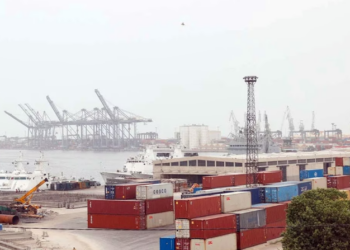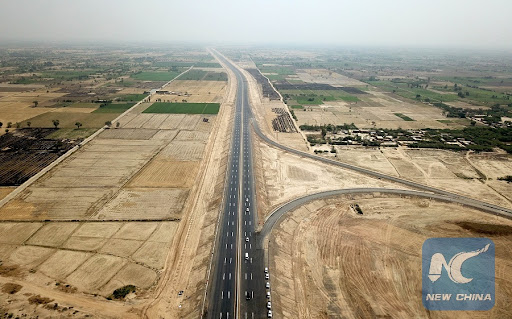
ISLAMABAD: The federal government has initiated a major plan to transform Pakistan’s transport corridors into thriving economic zones, which will not only boost industrial development but also create new opportunities in tourism, agriculture, and regional trade.
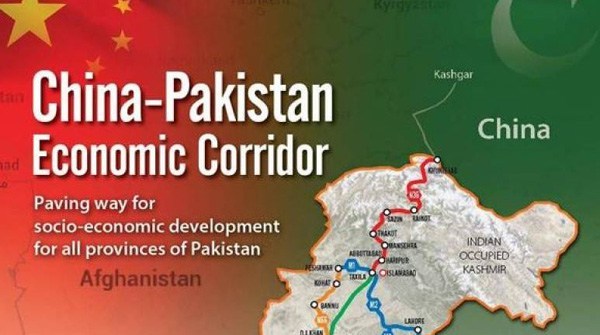
The proposal, announced during a high-level consultative session led by Minister for Planning, Development, and Special Initiatives, Ahsan Iqbal, emphasized that transport corridors like the China-Pakistan Economic Corridor (CPEC) are vital lifelines for the country’s economic growth.

During the session, senior officials from federal and provincial governments, along with urban planners, civil society experts, and private sector representatives, discussed detailed business plans and strategies to integrate industrial, commercial, and tourism activities along the country’s key transport routes.
“The future of Pakistan lies in transforming these corridors into economic hubs. Our vision is to harness our transport networks to drive industrial growth, regional integration, and sustainable development,” said Ahsan Iqbal.
According to discussions during the session, the eastern route of CPEC has been identified as the most beneficial in terms of connectivity, socio-economic impact, and tourism potential. It covers major urban centers like Karachi, Islamabad, and Gilgit and provides the shortest and most viable travel route.
The distribution of infrastructure development across provinces is also seen as more equitable along this route, with Punjab, Sindh, Khyber Pakhtunkhwa, Balochistan, and Gilgit-Baltistan benefiting from infrastructure investments.
Meanwhile, Islamabad and Dera Ismail Khan have been recognized as key economic hubs, with the potential for establishing special economic zones and logistics centers to support warehousing and other commercial activities.
A key theme of the session was to move beyond just constructing roads and railways. The government plans to establish economic zones along motorways, such as M-1, M-2, and M-5, featuring industrial parks, agro-processing units, and renewable energy projects. These zones are envisioned to cater to industries like chemical and pharmaceutical manufacturing, dairy farming, and logistics services. Additionally, centers for education and vocational training will be set up along the routes to equip the local workforce with necessary skills.
Ahsan Iqbal stressed the need for comprehensive business planning, which includes conducting feasibility studies and creating financial models that attract domestic and international investment. “This is the way forward to creating sustainable economic opportunities,” he said.
The minister emphasized that proper planning could unlock tremendous value by integrating tourism and agro-processing industries along these transport corridors. The development of value-added products in agriculture, along with increased competitiveness in global markets, is expected to create long-term benefits.
“Transport corridors should become economic lifelines, facilitating trade, investment, and regional collaboration,” Iqbal said, adding that Pakistan’s strategic location at the crossroads of South Asia, Central Asia, and the Middle East offers immense potential for regional trade.
The session concluded with a call for national collaboration between federal and provincial governments, private sector stakeholders, and international partners to make this ambitious project a reality. Iqbal highlighted that regional integration with neighboring countries like China, Afghanistan, and Iran could further strengthen Pakistan’s role in global trade.