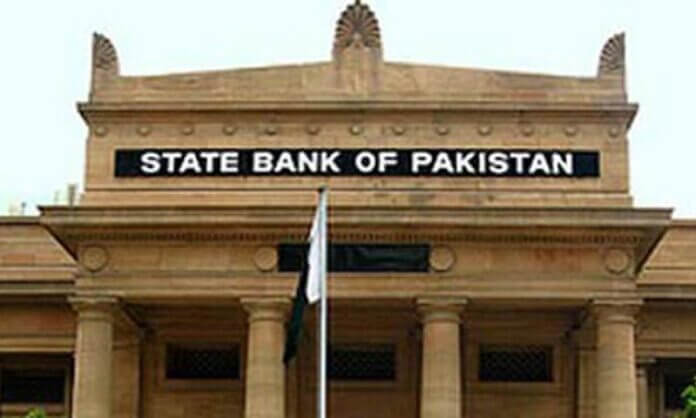
KARACHI: The State Bank of Pakistan (SBP) held its key policy rate at 12% on Monday, opting for stability despite easing inflation, which is expected to rise temporarily in March and May.
The decision comes after a senior-level International Monetary Fund (IMF) delegation reviewed Pakistan’s $7 billion bailout package, discussing new revenue targets and taxation measures that may influence inflation and monetary policy.
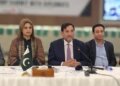

The central bank’s Monetary Policy Committee (MPC) convened to scope the economic outlook and, after thorough deliberations, opted to maintain the policy rate at 12%.
The committee noted that inflation in February 2025 turned out lower than expectation, mainly due to a drop in food and energy prices.
“Notwithstanding this decline, the committee assessed the risks posed by the inherent volatility in these prices to the current declining trend in inflation,” it said in a statement.
The committee observed that the current account, which had remained in surplus for the past few months, swung to a $0.4 billion deficit in January 2025. “This, coupled with weak financial inflows and ongoing debt repayments, led to a decline in the SBP’s foreign exchange reserves.”
The monetary status quo was driven by a decline in large-scale manufacturing output in H1FY25, a tax revenue shortfall in January and February, and global economic uncertainty amid ongoing tariff escalations.
“At the same time, core inflation is proving to be more persistent at an elevated level and thus uptick in the food and energy prices may lead to increase in inflation.
“Meanwhile, economic activity continues to gain traction, as reflected in the latest high-frequency economic indicators.”
Moreover, the SBP’s monetary panel viewed that some pressures on the external account had emerged due to rising imports amidst weak financial inflows.
On balance, the committee assessed the current real interest rate to be adequately positive on forward-looking basis to sustain the ongoing macroeconomic stability.
It reiterated the importance of maintaining a cautious monetary policy stance to stabilise inflation within the target range of 5 – 7%. This, along with structural reforms, is essential to achieve sustainable economic growth.
The central bank’s easing cycle, one of the most aggressive among emerging markets, follows a series of rate cuts totalling 1,000 basis points (bps) over six months, that took the key rate to 12% in January, down from a record high of 22% in June.
Inflation fell to 2.4% in January — the lowest in over nine years—and is expected to drop further to 2.2% in February, supporting the case for further easing.
However, risks remain as core inflation is still elevated, the current account deficit is widening, and market yields have been rising, suggesting the SBP may slow the pace of rate cuts, according to analysts.
With inflation stabilising but external pressures persisting, analysts believe the SBP is nearing the end of its rate-cutting cycle and may shift to a more data-driven approach in the coming months.
Pakistan could unlock a further tranche of funding if the IMF review is approved before the budget is unveiled in June, as it pursues economic reforms mandated by the IMF programme.
Anticipating a moderate rise from March to May, some analysts believe the central bank will stop when rates hit 10.5% to 11%, due to a potential rise in inflation.
Inflation will “bottom out” in the year’s first quarter before gradually rising, said Ahmad Mobeen, senior economist of S&P Global, who anticipates average inflation of 6.1% for 2025.
Despite the “sharp drop” in the Consumer Price Index (CPI), he said urban core inflation, indicative of price pressures, remained high, at 7.8%.
Under a $7 billion IMF bailout, Pakistan’s $350 billion economy grew 0.92% in the first quarter of fiscal 2024-25 which ends in June, according to data approved by the National Accounts Committee and released in December.