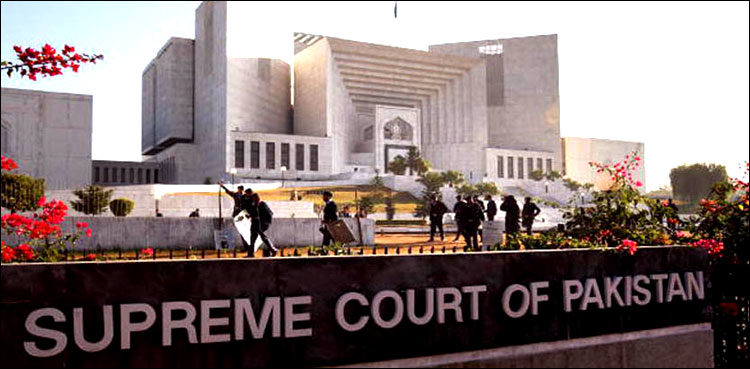
ISLAMABAD: The Supreme Court of Pakistan has ruled in favour of Coca-Cola Pakistan Limited, dismissing the Federal Board of Revenue’s (FBR) stance in a long-running tax apportionment dispute dating back to the tax year 2003.
In a detailed judgment authored by Justice Muneeb Akhtar and concurred by Justice Muhammad Shafi Siddiqui and Justice Mian Gul Hassan Aurangzeb, the apex court held that there is no mandatory or exclusive formula for apportioning expenses among different income sources. Instead, such allocation may be made on “any reasonable basis” under the law.


The dispute arose after the FBR claimed that Coca-Cola Pakistan failed to allocate its expenses in accordance with Income Tax Rule 13, and therefore reassessed the company’s tax liability. However, the Supreme Court ruled that if a taxpayer’s method of allocation is reasonable and justifiable, it cannot be rejected merely because it differs from the FBR’s formula.
The judgment clarified that under Section 67(1) of the Income Tax Ordinance, 2001, taxpayers are required to allocate expenses reasonably, but the rules issued by the FBR are not absolute or binding. Justice Akhtar emphasized that the law allows flexibility—different reasonable methods may coexist, even if they diverge from the FBR’s approach.
Coca-Cola Pakistan had used the Gross Profit Ratio (GPR) method for expense allocation, which the court deemed to be a reasonable basis. Consequently, the FBR’s amended assessment was declared legally unsustainable, and the Lahore High Court’s earlier judgment was set aside.
The decision is seen as a significant precedent for corporate taxpayers, reaffirming that the FBR’s procedural rules cannot override statutory principles of reasonableness under the Income Tax Ordinance.