ISLAMABAD: Speakers at a PIDE dialogue here on Monday stressed the need to shift Pakistan’s housing agenda from policy commitments to practical, evidence-based and scalable solutions through stronger collaboration among communities, experts, institutions and markets.
“Climate-responsive housing cannot be achieved through policies alone; it requires collaboration among communities, experts, institutions and markets to create practical solutions that reflect Pakistan’s realities,” said Pakistan Institute of Development Economics (PIDE) Registrar Dr Nasir Iqbal said.


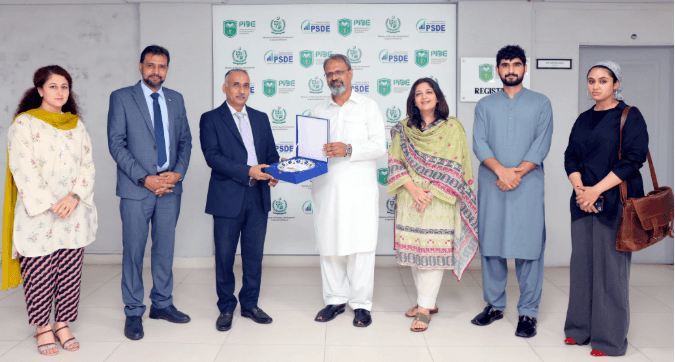
He was speaking at a roundtable dialogue on “Housing Matters: Climate-Responsive Housing”, organised by PIDE in collaboration with Shehersaaz under the global Urban Thinkers Campus series.
The dialogue brought together architects, urban planners, policymakers, academics and local government representatives to discuss affordable, sustainable and climate-resilient housing solutions for Pakistan.
Speakers emphasised that the country’s housing challenge was not simply about constructing more homes, but developing affordable housing that was environmentally responsible and capable of responding to changing climate conditions.
They called for stronger local government capacity, clearly defined institutional responsibilities and rigorous assessment of pilot projects before their expansion nationwide.
Dr Shafaat Nawaz, PhD Graduate in Urban Planning and Manager RASTA, PIDE, highlighted the potential of biophilic urbanism and climate-sensitive design, including natural ventilation, suitable building materials, shading and green spaces, to improve thermal comfort and reduce energy consumption.
Participants also stressed the importance of reviving indigenous architectural practices, including courtyards, shaded verandas, thick walls and locally available materials, which historically enabled communities to adapt to local climatic conditions.
Huma Baig of Earthwise highlighted passive solar design, permaculture and sustainable materials such as rammed earth, while straw-bale construction was also discussed as a potentially affordable and context-appropriate option.
Almas Shakoor, Executive Director of Shehersaaz, shared her organisation’s work with UN-Habitat and the Adaptation Fund on water facilities and progressive housing programmes in Rawalpindi and Nowshera, underscoring the importance of community-centred approaches.
Dr Inayat Ullah, Director of PIDE’s Centre for Agriculture, Climate Change and Rural Economy (CACCRE), cautioned against scaling up pilot projects without proper impact assessment and called for collaborative, evidence-based research to determine their feasibility and effectiveness.
Participants noted that climate resilience must extend beyond individual buildings to neighbourhood-level planning, addressing flooding, drainage, waste management, public spaces, energy efficiency and urban infrastructure.
The dialogue also highlighted barriers to affordable housing, including rising land and construction costs, taxation, land acquisition challenges and limited community participation in housing decisions.
The roundtable concluded that Pakistan’s housing agenda needed to move beyond policy discussions towards coordinated, practical and scalable interventions, with institutions, communities, experts and development partners working together to create affordable, sustainable and climate-resilient living environments.