

Customs Today
  • Home
  • Islamabad
  • Karachi
  • Lahore
  • National
  • Transfers and Postings
  • Chambers & Associations
  • Business
No Result
View All Result
Customs Today
  • Home
  • Islamabad
  • Karachi
  • Lahore
  • National
  • Transfers and Postings
  • Chambers & Associations
  • Business
No Result
View All Result
Customs Today
No Result
View All Result
Home Science & Technology Science

A team of astronomers find baby blue galaxy close to dawn of time

byCustoms Today Report
08/05/2015
in Science, Science & Technology
Share on FacebookShare on Twitter

You might also like

Tesla driverless system to use updated radar technology

12/09/2016

Apple to develop its own self-driving technology

10/09/2016

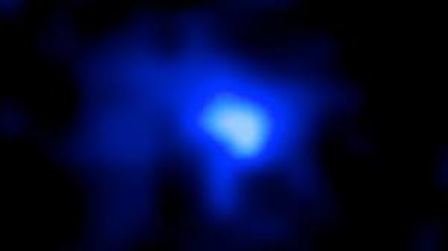
CANADA: A team of astronomers peering deep into the heavens have discovered the earliest, most distant galaxy yet, just 670 million years after the Big Bang.
The findings, described in Astrophysical Journal Letters, reveal a surprisingly active, bright galaxy near the very dawn of the cosmos that could shed light on what the universe, now 13.8 billion years old, was really like in its young, formative years.
“We’re actually looking back through 95 per cent of all time to see this galaxy,” said study co-author Garth Illingworth, an astronomer at the University of California, Santa Cruz.
“It’s really a galaxy in its infancy … when the universe was in its infancy.”
Capturing an image from a far-off light source is like looking back in time. When we look at the sun, we’re seeing a snapshot of what it looked like eight minutes ago.
The same principle applies for the light coming from the galaxy known as EGS-zs8-1. We are seeing this distant galaxy as it existed roughly 13.1 billion years ago.
EGS-zs8-1 is so far away that the light coming from it is exceedingly faint. And yet, compared with other distant galaxies, it is surprisingly active and bright, forming stars at roughly 80 times the rate the Milky Way does today.
This precocious little galaxy has built up the mass equivalent to about 8 billion suns, more than 15 per cent of the mass of the Milky Way, even though it appears to have been in existence for a mere fraction of the Milky Way’s more than 13 billion years.

Related Stories

Tesla driverless system to use updated radar technology

byCT Report
12/09/2016

WASHINGTON: Electric carmaker Tesla announced Sunday it was upgrading its Autopilot software to use more advanced radar technology. In a...

Apple to develop its own self-driving technology

byCT Report
10/09/2016

SAN FRANCISCO: Apple may not become an automaker, but it still wants to develop its own self-driving technology. The iPhone-maker's...

NASA spots slowest known magnetar

byCT Report
10/09/2016

WASHINGTON: Astronomers have found evidence of a magnetar - magnetised neutron star - that spins much slower than the slowest...

‘YouTubers’ outshining old-school television

byCT Report
09/08/2016

SAN FRANCISCO: A media revolution is taking place, and most people over 35 years of age aren’t tuned in. Millennial...

Next Post

Spacecraft & satellites at risk from 50,000 pieces of debris that hurtle around the Earth

  • Terms and Conditions
  • Disclaimer

© 2011 Customs Today -World's first newspaper on customs. Customs Today.

No Result
View All Result
  • Transfers and Postings
  • Latest News
  • Karachi
  • Islamabad
  • Lahore
  • National
  • Chambers & Associations
  • Business
  • About Us

© 2011 Customs Today -World's first newspaper on customs. Customs Today.