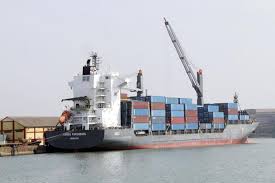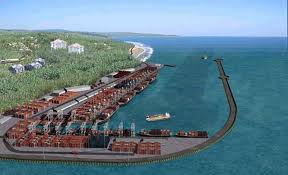
NEW YORK: Adani Ports hopes to replicate the success of its flagship Mundra Port, India’s biggest non-government cargo gateway, at its new container terminal project at Vizhinjam, a deep-water, green-field site that is designed to counter the growing dominance of Sri Lanka’s Colombo Port for Indian transshipment cargo.
Adani said it is looking to set up strategic partnerships with major ocean carriers in an attempt to make the Vizhinjam project more viable and attractive. This business model has significantly benefited Adanis at Mundra.
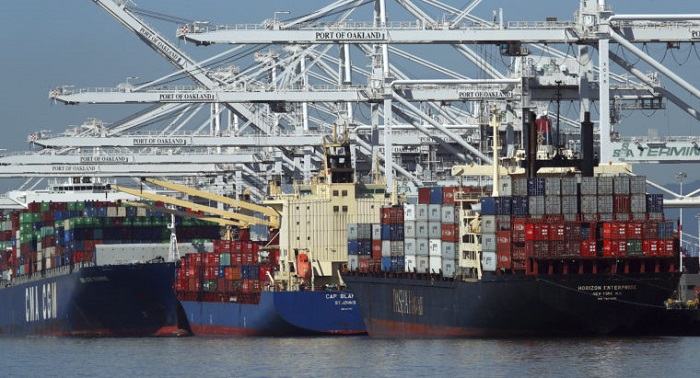

“We are very much confident of collaboration with major shipping lines for our Vizhinjam Port,” Adani Ports said, in response to a JOC.com query.
At Mundra, the company has joint ventures with Mediterranean Shipping Co. and CMA CGM for the operation of container facilities. As a result, the carriers have shifted their Mundra calls from DP World-operated Mundra International Container Terminal to the Adani-managed facilities.
“We had undertaken a feasibility study, and the Vizhinjam terminal can be made viable based on tying up with shipping lines,” the company said.
Vizhinjam’s first phase comprises a 2,625-foot quay, a 131-acre container yard and an annual capacity of 1 million 20-foot-equivalent units, capable of handling 18,000-TEU ships.
Adanis over the summer won a 40-year concession to design, build and operate the Vizhinjam terminal, its ninth venture in the country, after it emerged as the lone bidder for the public-private-partnership project.
The first phase of the project involves an investment of more than Rs. 4,100 crore (about $631 million). This includes an Rs. 1,635 crore ($252 million) state grant and an Rs. 2,500 crore ($385 million) investment from Adanis.
Adani Ports has ambitious goals for the facility and said it will commission the new facility in 1,000 days and it will handle 300,000 TEUs in its first year.
From a location perspective, Vizhinjam has some distinct advantages. The site has a natural depth of 59 feet, with room to increase it to 72 feet with dredging, and is close to the main east-west international shipping route, another major attraction for mainline vessels. While the project has the potential to become a transshipment point for cargo moving via India’s eastern ports, much of its success will depend on hinterland connectivity infrastructure and how effectively it can compete with Colombo, which is about 175 nautical miles away.
In its responses to JOC.com, the company said the site is already connected to the interstate highway system, while the local administration has committed to providing dedicated intermodal rail connectivity to and from the port site over the next six years.