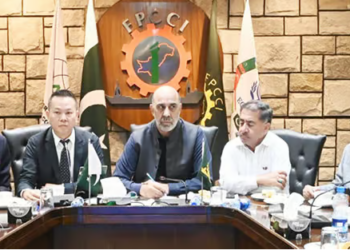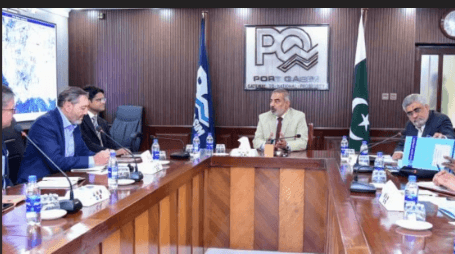
KARACHI: A 10-member, high-level reconnaissance mission of subject-matter experts from the Asian Development Bank (ADB), led by Suenghyun Kim, senior transport specialist, visited the Karachi Port Trust (KPT) to review existing and future port–rail connectivity and assess related logistics infrastructure. The delegation was received by KPT Chairperson Rear Admiral (r) Shahid Ahmed.
The delegation was briefed on KPT’s cargo-handling strengths, its role as Pakistan’s maritime gateway, and the port’s strategic connectivity requirements for efficient inland cargo movement. Discussions also covered KPT’s ongoing and planned development initiatives aimed at enhancing operational efficiency, including dredging, increasing draught depth and strengthening multimodal integration with terminal operators.


The KPT chairperson said that at present most cargo from Karachi Port is transported by road trailers, leading to acute urban congestion and heightened road safety risks due to heavy traffic. While cargo-handling operations at the port function round the clock, the movement of trailers out of the port is restricted until after 11pm, creating a critical bottleneck in cargo transhipment. Under the ML-1 framework, Karachi Port would be positioned to dispatch containerised and bulk cargo on a 24-hour basis.
The delegation also discussed project impacts, noting that major beneficiaries of enhanced port-rail integration would include South Asia Pakistan Terminals Ltd (SAPTL), Karachi Gateway Terminal (KGTL) and Karachi Gateway Multipurpose Terminal (KGMTL), supporting higher throughput and improved operational efficiency.
ADB reaffirmed its intent to align as a development partner with the Government of Pakistan, with the Karachi-Rohri rail corridor identified as the first priority project. Following earlier engagements with the government, the reconnaissance mission represents ADB’s initial step towards revitalising rail connectivity to Pakistan’s ports. The delegation later visited Karachi Port facilities, including terminal operators, to conclude the day’s proceedings.