You might also like


KABUL: Hajji Sher Mohammad tended his flock of sheep at the foot of a northern Afghan mountain range, staring off into the distance and invoking what has become a magical name, Finland, over there somewhere.
“There is a country called Finland, and that’s where lambskins go,” he said. Beyond that, Hajji Mohammad added, “only God knows.”
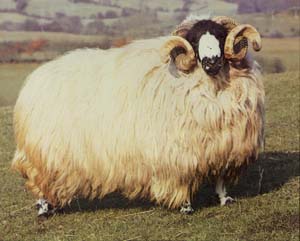
Most Western countries import little from Afghanistan other than carpets and opium. But Finnish fur buyers’ growing regard for the velvety pelts of Afghan karakul lambs has made them this country’s largest export destination in the West for any product, according to Afghanistan’s official export statistics.
Last year, Finland, a powerhouse in the global fur trade, imported nearly a half-million Afghan lamb pelts, auctioning them off to fashion houses to be turned into luxurious women’s coats, among other items.
It is a niche product, to be sure, usually found only in high-priced boutiques or department stores when it is sold in the West. (It is often marketed as astrakhan fur in those quarters.) But the trade has remained vital to Afghanistan’s ailing economic sector.
The hub of the Afghan-Finnish fur trade is the northern city of Mazar-i-Sharif. Fur traders gather here each March and April with stacks of pelts of the karakul breed of sheep purchased from shepherds across the countryside. The traders stand in doorways and along the walls of trading floors, watching anxiously as middlemen one rung above them — the exporters — sort the pelts by quality into three piles and decide how much each is worth.
The talk often turns to Finland, which, for Afghan fur traders, is another name for the big leagues. Only traders who amass 20,000 pelts generally go on to Helsinki’s fur auctions. Those who have been describe to those who have not a country of unimaginably cold winters, of people who refuse to take bribes, and of angry animal rights activists.
“They started shouting, ‘Go back home! Why do you kill these animals,” Amin Tawakaly, a second-generation Afghan fur trader, recalled, describing the protesters who once confronted him outside his Helsinki hotel. “They were shouting in Finnish, so I had to ask what they were saying.”
Newborn karakul lambs are valued above other breeds for the luster and tight, soft curls of their fur, which form mesmerizing patterns and curlicues. But within a day or two of birth, a lamb’s fur grows woolier and loses its value.
A decision is made quickly whether to slaughter the lamb or raise it for its meat and wool, with shepherds weighing how much rain and grass they believe will be available that year. Usually about half of the lambs will be killed for their pelts.
It is not only European sensibilities that object to killing the lambs. The Taliban, when they were in power in Afghanistan, tried to clamp down on the trade as well, particularly in the cruelest top end of it: pelts from lambs that have not yet been born, requiring the killing of pregnant ewes to harvest. Experts estimate they make up less than 10 percent of the pelts sold.
Tawakaly even empathized with his Finnish hecklers to some degree. As a child, he dreaded the slaughter of lambing season and once ran away with a newborn lamb, hoping to save it.
“After two days, my father caught me and he killed it,” Tawakaly said, with a half-smile, half-grimace. “It was his business and I couldn’t stop him.”
While most lamb pelts from Afghanistan and other Central Asian states are shipped abroad, a few of the best are sent to Kabul, where furriers style them into the memorable peaked hats former President Hamid Karzai made famous. A silvery or tan karakul hat can sell for more than $1,000.