
Customs Today
  • Home
  • Islamabad
  • Karachi
  • Lahore
  • National
  • Transfers and Postings
  • Chambers & Associations
  • Business
No Result
View All Result
Customs Today
  • Home
  • Islamabad
  • Karachi
  • Lahore
  • National
  • Transfers and Postings
  • Chambers & Associations
  • Business
No Result
View All Result
Customs Today
No Result
View All Result
Home Ports and Shipping

Africa requires investments of billions per year to be brought up to par

byCustoms Today Report
02/11/2015
in Ports and Shipping
Share on FacebookShare on Twitter

MALI: The infrastructure throughout sub-Saharan Africa requires additional investments of billions per year to be brought up to par. In particular, the region’s ports are a bottleneck and contribute to lengthy delays that significantly increase the cost of doing business across the continent. So wouldn’t it be sensible to invest in a massive extension of port facilities all over Africa? Probably not.

As my colleagues and I show in our recent paper, “Why Does Cargo Spend Weeks in Sub-Saharan African Ports?” it is actually the collusion between controlling agencies, port authorities, private terminal operators, logistics operators, and large shippers that poses the biggest challenge to the efficient handling of goods. It is the governance of the ports that matters most, not the large-scale investments in infrastructure.
You might also like

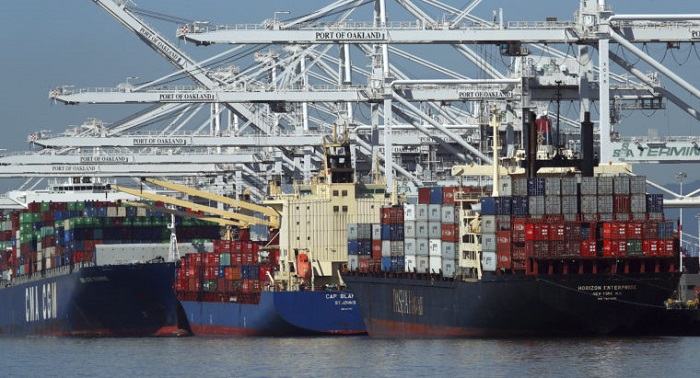
Container ships wait to be unloaded at the Port of Oakland on Wednesday, March 7, 2018, in Oakland, Calif. The U.S. trade deficit rose in January to the highest level since October 2008, defying President Donald Trump's efforts to bring more balance to America's trade with the rest of the world, the Commerce Department said Wednesday. (AP Photo/Ben Margot)

Shipping activity at Port Qasim on February 11

11/02/2021

KPT ships movement, cargo handling report Feb 10

09/02/2021

Here are the facts: Cargo dwells in sub-Saharan ports unusually long—more than two weeks on average, compared to under a week in large ports in Asia, Europe, and Latin America. Excluding Durban and Mombasa, the average amount of time cargo dwells in sub-Saharan ports is close to 20 days. These long wait times hurt the efficiency of port operations and the economy in general.

Congestion and delays at sub-Saharan ports make the region’s manufacturing companies (who typically depend on sea transport) largely uncompetitive. Consumers lose also, as imports become more expensive. For manufacturing companies, if they need to wait for weeks to get their inputs, they need to stock large quantities, which in turn creates the need for large and extremely costly inventories. As a result, it is difficult for countries with long cargo wait times to attract foreign direct investment.

Reaching the highest international standard for such wait times (3-4 days) is difficult since it requires having private sector practices at par with excellent public practices.

There are three categories of ports in the world: (1) “unreformed” ports, where average “dwell time” is more than 15 days; (2) “partially reformed ports,” where dwell times average between 6 and 10 days; and (3) “world-class ports,” with average dwell times of around 3 days.

In sub-Saharan Africa, most ports are still “unreformed.” However, some ports—Dar es Salaam, Mombasa—have made the first step and reduced the average dwell time from 15-20 to 6-10 days. This first step in port reform typically entails new investment in equipment and infrastructure, some changes in storage tariffs, new traffic flows, and increased storage areas (usually including storage capacity outside the port area).

Related Stories

Container ships wait to be unloaded at the Port of Oakland on Wednesday, March 7, 2018, in Oakland, Calif. The U.S. trade deficit rose in January to the highest level since October 2008, defying President Donald Trump's efforts to bring more balance to America's trade with the rest of the world, the Commerce Department said Wednesday. (AP Photo/Ben Margot)

Shipping activity at Port Qasim on February 11

byCT Report
11/02/2021

KARACHI: Three ships namely, Glen Canyon, Al-Salam- II and TSM Pollux carrying Containers, Gas oil and Palm oil were arranged...

KPT ships movement, cargo handling report Feb 10

byCT Report
09/02/2021

KARACH: Following were the movements of ships and cargo handling at the Karachi Port Trust (KPT) during the last 24...

Container ships wait to be unloaded at the Port of Oakland on Wednesday, March 7, 2018, in Oakland, Calif. The U.S. trade deficit rose in January to the highest level since October 2008, defying President Donald Trump's efforts to bring more balance to America's trade with the rest of the world, the Commerce Department said Wednesday. (AP Photo/Ben Margot)

Shipping activity at Port Qasim on January 8

byCT Report
08/02/2021

KARACHI: Five ships namely, Diyala, MSC Jasmine, Stena Image, BW Danube, Goral Frost and carrying Containers, Palm oil, Mogas and...

Container ships wait to be unloaded at the Port of Oakland on Wednesday, March 7, 2018, in Oakland, Calif. The U.S. trade deficit rose in January to the highest level since October 2008, defying President Donald Trump's efforts to bring more balance to America's trade with the rest of the world, the Commerce Department said Wednesday. (AP Photo/Ben Margot)

Shipping activity at Port Qasim Feb 3

byCT Report
03/02/2021

KARACHI: Three ships namely, Maersk Detroit, Aye Evolution and Yufu Crown carrying Containers, Coal and Gas oil were allotted berths...

Next Post

Korea Electric Power Corporation drops 2.44% during past week

  • Terms and Conditions
  • Disclaimer

© 2011 Customs Today -World's first newspaper on customs. Customs Today.

No Result
View All Result
  • Transfers and Postings
  • Latest News
  • Karachi
  • Islamabad
  • Lahore
  • National
  • Chambers & Associations
  • Business
  • About Us

© 2011 Customs Today -World's first newspaper on customs. Customs Today.