Customs Today
  • Home
  • Islamabad
  • Karachi
  • Lahore
  • National
  • Transfers and Postings
  • Chambers & Associations
  • Business
No Result
View All Result
Customs Today
  • Home
  • Islamabad
  • Karachi
  • Lahore
  • National
  • Transfers and Postings
  • Chambers & Associations
  • Business
No Result
View All Result
Customs Today
No Result
View All Result
Home Science & Technology Science

Annual bleaching could threaten some species of tropical coral, study

bySana Anwar
18/11/2015
in Science, Science & Technology
Share on FacebookShare on Twitter

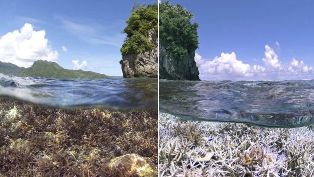
LONDON: Some species of tropical coral will find it difficult to recover after the yearly mass bleaching events predicted to occur later this century, suggests a new study.

The findings come from the first controlled experiment to look at the effects of annual bleaching on corals, reported in the Royal Society journal Proceedings B.


You might also like

Tesla driverless system to use updated radar technology

12/09/2016

Apple to develop its own self-driving technology

10/09/2016

While the study suggests some species of corals can survive heat stress of a few weeks, the researchers warned this might not be the case for longer bleaching events.

And, even if some coral species do survive, the loss of others will mean less diversity on reefs which will have flow-on effects, they said.

“A lot of the diversity of other animals that live on coral reefs is based on the fact that you have a very three dimensional reef structure which is made up of different sizes and shapes of coral,” said lead researcher Dr Verena Schoepf, a marine biologist from the University of Western Australia.

“If there are only a few shapes or sizes of coral left then that will have cascading effects on all the other organisms … because there will be less habitat.”

Coral bleaching occurs when sea temperatures rise 1 or 2 degrees above maximum summer temperatures in a given location.

Sometimes water temperatures remain high for a few weeks, but in other cases months.

This causes coral to expel the photosynthetic algae they rely on for the bulk of the food, which slows or stops the coral’s growth and bleaches it of colour.


Related Stories

Tesla driverless system to use updated radar technology

byCT Report
12/09/2016

WASHINGTON: Electric carmaker Tesla announced Sunday it was upgrading its Autopilot software to use more advanced radar technology. In a...

Apple to develop its own self-driving technology

byCT Report
10/09/2016

SAN FRANCISCO: Apple may not become an automaker, but it still wants to develop its own self-driving technology. The iPhone-maker's...

NASA spots slowest known magnetar

byCT Report
10/09/2016

WASHINGTON: Astronomers have found evidence of a magnetar - magnetised neutron star - that spins much slower than the slowest...

‘YouTubers’ outshining old-school television

byCT Report
09/08/2016

SAN FRANCISCO: A media revolution is taking place, and most people over 35 years of age aren’t tuned in. Millennial...

Next Post

Azerbaijan's oil exports drop 0.4% in Jan-Oct of 2015

  • Terms and Conditions
  • Disclaimer

© 2011 Customs Today -World's first newspaper on customs. Customs Today.

No Result
View All Result
  • Transfers and Postings
  • Latest News
  • Karachi
  • Islamabad
  • Lahore
  • National
  • Chambers & Associations
  • Business
  • About Us

© 2011 Customs Today -World's first newspaper on customs. Customs Today.