Customs Today
  • Home
  • Islamabad
  • Karachi
  • Lahore
  • National
  • Transfers and Postings
  • Chambers & Associations
  • Business
No Result
View All Result
Customs Today
  • Home
  • Islamabad
  • Karachi
  • Lahore
  • National
  • Transfers and Postings
  • Chambers & Associations
  • Business
No Result
View All Result
Customs Today
No Result
View All Result
Home Breaking News
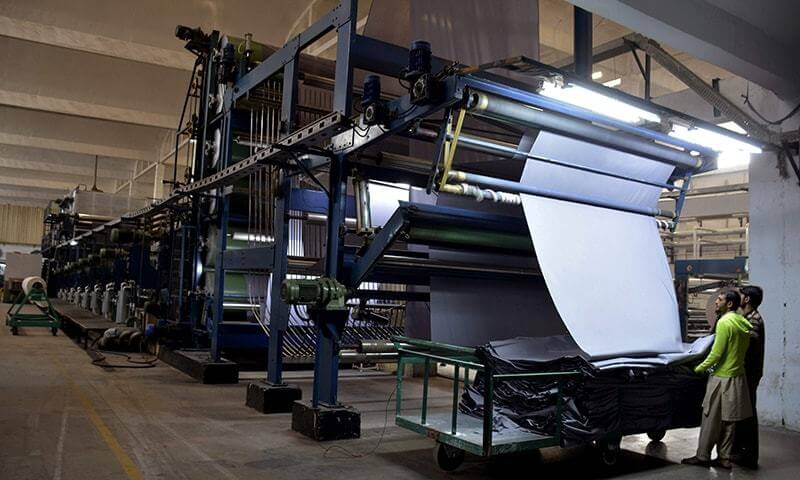
In this photograph taken on November 16, 2016, Pakistani workers operate a machine at a textile factory in Faisalabad.
As Pakistan slowly emerges from a long-term power crisis, its once booming textile sector is scrambling to find its feet -- but high energy costs and a decade lost to competitors mean recovery is far from assured. Energy production was severely depressed for more than 10 years due to chronic under-investment, inefficiencies in the power network and an inability to collect sufficient revenue to cover costs.
 / AFP PHOTO / KHALIL UR-REHMAN / TO GO WITH AFP STORY: Pakistan-Energy-Industry-Textiles, FOCUS by Caroline Nelly PERROT

In this photograph taken on November 16, 2016, Pakistani workers operate a machine at a textile factory in Faisalabad. As Pakistan slowly emerges from a long-term power crisis, its once booming textile sector is scrambling to find its feet -- but high energy costs and a decade lost to competitors mean recovery is far from assured. Energy production was severely depressed for more than 10 years due to chronic under-investment, inefficiencies in the power network and an inability to collect sufficient revenue to cover costs. / AFP PHOTO / KHALIL UR-REHMAN / TO GO WITH AFP STORY: Pakistan-Energy-Industry-Textiles, FOCUS by Caroline Nelly PERROT

APTMA calls for tariff rationalization to prevent economic deterioration

byCT Report
22/12/2023
in Breaking News, Chambers & Associations, Latest News, Pakistan Chambers
Share on FacebookShare on Twitter

FAISALABAD: The All Pakistan Textile Mills Association (APTMA) has expressed deep concern over the “absolutely dismal state of the power sector” and emphasized the dire need for power tariff rationalization to prevent further economic deterioration.

In a statement, ATPMA extended its gratitude to Federal Minister for Energy Muhammad Ali for taking cognizance of the high power tariffs and their negative fallouts. Furthermore, APTMA urged him to expedite the reform process considering the gravity of the situation.


You might also like

Gold price jumps Rs5,700 per tola

22/08/2026

PVARA completes Pakistan’s Virtual Asset Framework, opens licensing portal

22/08/2026

APTMA said that power consumption for the first 20 days of December declined by 26 percent year-on-year for industrial consumers and by 8 percent for domestic consumers on the LESCO network, driven by a decline in high-end domestic consumption.

The statement said that the government must carefully review power tariff policies to reverse the incoming catastrophe. Power tariffs must be reassessed and revised to an economically optimal level that increases power consumption and power sector revenue.

A rational tariff for industrial consumers will stimulate industrial activities across the economy, increase power consumption and allow for a sustainable and financially viable power sector. It will also create incentives for industry to move away from RLNG/gas-based captive generation, freeing up indigenous resources and bringing down the energy import bill, it added.

It said that growth in industrial activity, especially in export sectors, will also revive millions of jobs and potentially add millions more to create income and allow households to come out of lifeline and protected categories, further increasing power sector revenue and reducing the quantum of cross subsidization.

However, the power division’s current policies—like most other policies, and especially those on taxation—are built on the philosophy of taking an ever-increasing share of an ever-shrinking pie by squeezing those who are productive to the point that there is no benefit in being productive and no one is willing to work because they know that whatever they make, the government will take from them in one way or another to finance its own shortcomings, it added.

APTMA said that the economy is stuck in a vicious cycle where ever-increasing power tariffs are causing power consumption to decline continuously to the point where Pakistan will have power companies but no consumers for them to cater to. The only way to come out of this cycle is to rationalize power tariffs at levels that stimulate the economy and allow for sustained levels of higher power consumption and therefore higher power sector revenue.

Related Stories

Gold price jumps Rs5,700 per tola

byCT Report
22/08/2026

KARACHI: Gold prices surged in both international and domestic markets, with the price of gold rising by $57 per ounce...

PVARA completes Pakistan’s Virtual Asset Framework, opens licensing portal

byCT Report
22/08/2026

ISLAMABAD: Pakistan’s Virtual Assets Regulatory Authority (PVARA) has opened its licensing portal for virtual asset service providers. The move completes...

KP approves Digital Payment Act to promote cashless economy

byCT Report
22/08/2026

PESHAWAR: The Khyber Pakhtunkhwa government has approved the Khyber Pakhtunkhwa Promotion of Digital Payment Act 2026, aiming to promote digital...

Aurangzeb, SRF delegation, discuss investment opportunities, economic cooperation

byCT Report
22/08/2026

ISLAMABAD: Federal Minister for Finance and Revenue, Senator Muhammad Aurangzeb held a meeting with a high-level delegation of the Silk...

Next Post

SBP releases video to identify counterfeit Rs5,000 note

  • Terms and Conditions
  • Disclaimer

© 2011 Customs Today -World's first newspaper on customs. Customs Today.

No Result
View All Result
  • Transfers and Postings
  • Latest News
  • Karachi
  • Islamabad
  • Lahore
  • National
  • Chambers & Associations
  • Business
  • About Us

© 2011 Customs Today -World's first newspaper on customs. Customs Today.