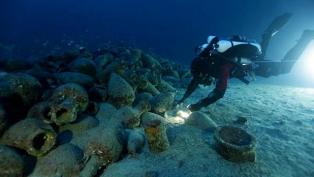
BRENT: Shipwrecks were the stuff of lore around the craggy coasts of Fourni, a Greek archipelago close to Turkey in the eastern Aegean Sea. Generations of local fishermen and sponge divers had seen piles of ancient pottery collecting algae on the seafloor. Last month, a group of marine archaeologists finally investigated the waters, and their wealth of findings far exceeded expectations.
During the very first dive of the expedition, the team found the remains of a late Roman-period wreck strewn with sea grass in shallow water. By day 5, the researchers had discovered evidence of nine more sunken ships. The next day, they found another six. By the time the 13-day survey was finished, the divers had located 22 shipwrecks– some more than 2,500 years old — that had never been scientifically documented before.


Just how many more wrecks are hidden around Fourni — which lies between the islands of Samos and Icaria — is anyone’s guess, Campbell said. The expedition turned up doomed vessels from the Archaic period (700-480 B.C.) to the late medieval period (16th century A.D.), from depths of 180 feet (55 meters) to as shallow as 10 feet (3 m). And yet, this initial survey covered merely 17 square miles (44 square kilometers), just 5 percent of the archipelago’s coast. Previously, about 180 ancient shipwrecks had been well-documented in all of Greece’s territorial waters. These new discoveries add 12 percent to the total number of known wrecks, the leaders of the project said.