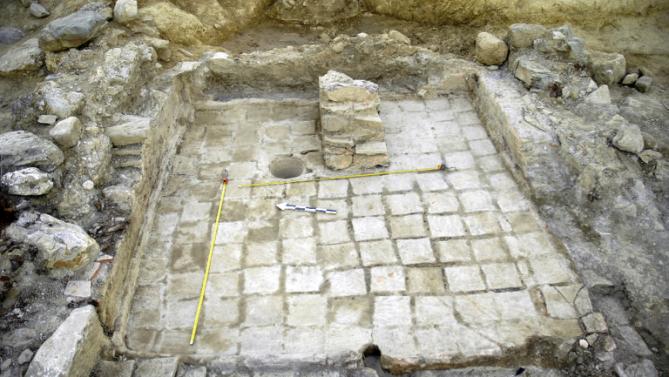


LONDON: The culture ministry announced that the ruins of an ancient palace dating back to the Mycenaean Age have been discovered. Archaeologists in Greece have found the palace that is having important archaic inscriptions.
The palace discovered near Sparta in southern Greece having 10 rooms was likely built around the 17th-16th centuries BC. Archaeologists have discovered objects of worship, clay figurines, a cup adorned with a bull’s head, swords and fragments of murals from the site.
Since 2009, archaeologists have excavated inscriptions on tablets explaining ceremonies, names and places in a script called Linear B, which is said to be the oldest script to be discovered in Europe. The ministry said that the discovery will help conduct more research on the ‘political, administrative, economic and societal organisation of the region’.
It will provide new information on the beliefs and language systems of the Mycenean people. Till now in this year, more than 150 archaeological excavations have been carried out in Greece, which indicates how rich Greece is when it comes to 150 archaeological excavations.
“The palace complex of Aghios Vassilios Hill provides us with a unique opportunity to investigate the creation and evolution of a Mycenaean palatial centre in order to reconstruct the political, administrative, economic and social organization of the region”, said the culture ministry. The latest discovery is considered to be the most significant discovery made in the region. Experts have termed the discovery to be a fascinating discovery.

Karachi Port sets 138-year cargo handling record
KARACHI: Pakistan's maritime sector has achieved a major milestone as Karachi Port set a new record in its 138-year history...