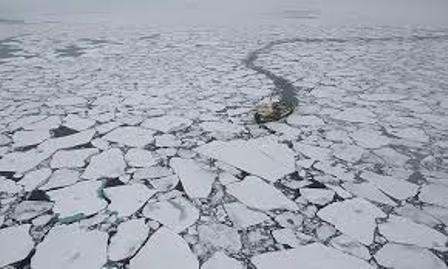
SYDNEY: Arctic sea ice reached a maximum seasonal extent on Feb. 25 that was the smallest on record, the National Snow and Ice Data Center, or NSIDC reported.
The ice sheet covered 14.54 million sq. kilometers (5.61 million sq. miles), according to the NSIDC, part of the Cooperative Institute for Research in Environmental Sciences at the University of Colorado Boulder.
That represents a decline of 1.1 million sq. kilometers (685 million sq. miles) compared with the median between 1981 and 2010.


This year’s maximum extent of Arctic sea ice came 15 days earlier than during the 1981-2010 period, when the peak was typically closer to mid-March.
Scientists say that an unusually warm February in some areas of Russia and Alaska may have contributed to the reduction in sea ice.
NSIDC experts noted that “a late season surge in ice growth is still possible” and said they will publish an update in April.
Other research has shown that the loss of ice due to global warming causes additional increases in ocean and atmospheric temperatures.