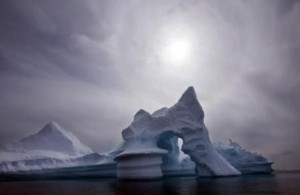


NEW YORK: Sea ice in the Arctic is near its all-time minimum for the end of winter, increasing fears that summers in the polar region could be completely free of it within 20 or 30 years.
The area of the Arctic covered by floating sea ice is already the lowest for this time of year, according to the latest satellite data. It could fall below the record winter minimum if there is no improvement in the next two weeks.
Sea ice expands and contracts with the seasons but satellite data collected since the 1970s shows that it is retreating further during the summer months compared to three decades ago.
Sea ice in summer has shrunk by 30 per cent on average over the past 30 years while average temperatures in the Arctic have risen by about 4C – more than 3C warmer than the global average. Scientists predict Arctic summers could be completely free of sea ice within the next 20 or 30 years, and some studies have suggested it could happen even earlier.
Satellite records show the area of the Arctic covered by sea ice in March has also dwindled in recent decades, although to a lesser extent than in summer when the natural minimum point is reached in September.
Scientists at the US National Snow and Ice Data Centre in Boulder, Colorado, who monitor sea ice in the Arctic and Antarctic, said it is too early to say whether the record winter minimum is likely to be reached this year. Weather patterns – such as cloudiness and wind speeds and directions – have a strong influence on sea ice formation and it is still possible for the rapid formation of ice in the next couple of weeks, they said. Mark Serreze, the director of the centre, said: “Having a record low winter minimum would tend to set us up for a low September extent because we’d be starting off on a bad footing. Essentially, we are setting the table.

Karachi Port sets 138-year cargo handling record
KARACHI: Pakistan's maritime sector has achieved a major milestone as Karachi Port set a new record in its 138-year history...