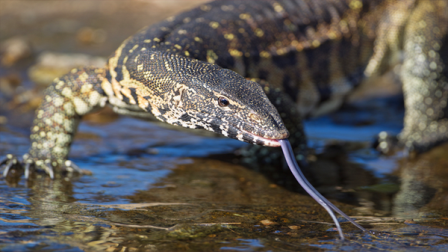


TALU: These carnivorous ‘Nile monitors’ are big enough to eat cats. And now shotgun-toting wildlife officers plan to kill as many Nile monitors as they can before breeding season, our partners at the Sun Sentinel reports.
The African reptiles, which can grow to 8 feet long, have established a breeding population along the C-51 canal and nearby waterways in central Palm Beach County, where they devour native wildlife.
Although state wildlife officials have been hunting them down for several years, they plan a new push now, since the approach of breeding season makes the lizards more active and easier to spot.
“We have found that the population hasn’t spread very far from the C-51 Canal, and if we increase the pressure, we might be able to eradicate them,” said Jenny Ketterlin Eckles, non-native wildlife biologist for the Florida Fish and Wildlife Conservation Commission.
State officials will increase patrols from once a month to four to six times a month, immediately killing any monitors found. They will also distribute fliers asking the public to photograph and report any Nile monitors.
Although not dangerous to people unless harassed, they eat a wide range of wildlife, including small mammals, reptiles and fish. They are considered a threat to burrowing owls, including eggs, chicks and adults.
The lizards have been known to consume domestic cats in their habitat in Africa. In Cape Coral, site of the largest Nile monitor population in Florida, there have been unconfirmed reports of monitors killing pets.
One man thought monitors were responsible for the disappearance of his Dachsund puppies, and several people reported a mysterious decline of the feral cat population when the monitors appeared, Eckles said.

Karachi Port sets 138-year cargo handling record
KARACHI: Pakistan's maritime sector has achieved a major milestone as Karachi Port set a new record in its 138-year history...