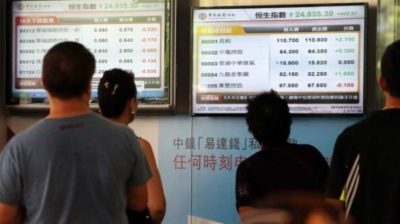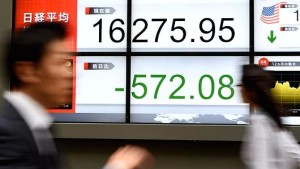
TOKYO: Asian stocks rose, erasing losses to snap the biggest four-day decline since February amid concerns over the U.K. leaving the European Union.
The MSCI Asia Pacific Index rose 0.3 percent to 126.89 as of 11:16 a.m. in Hong Kong, wiping out an earlier loss of as much as 0.5 percent. The gauge tumbled 4.4 percent in the past four days, the biggest drop since February, as new polls indicated more Britons favor leaving the EU than want to remain. Japan’s Topix index climbed 0.9 percent as the yen weakened. The Shanghai Composite Index rallied, climbing back from losses after China’s domestic equities were denied entry into MSCI Inc.’s indexes.

“While we get a bounce following the huge knockdown across markets, investors should probably sell into the strength ahead of the Brexit vote,” Nicholas Teo, a trading strategist at KGI Fraser Securities Pte in Singapore, said by phone. “There’s a lot of uncertainties out there. A statement from the Fed tonight may help calm the market, but concerns remain on the timing of the rate hike.”
The Federal Reserve is ending a two-day meeting Wednesday, with traders seeing zero chance that policy makers will raise interest rates and a 16 percent probability of a tightening in the next meeting in July. The Bank of Japan will announce its policy decision on Thursday.
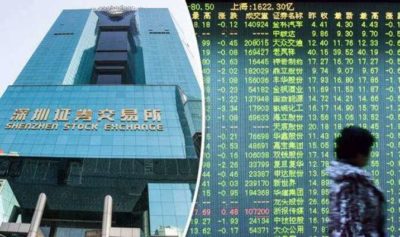
Chinese stocks erased earlier losses sparked by MSCI’s rejection of the nation’s domestic equities into benchmark indexes. The Shanghai Composite Index advanced 1.6 percent, reversing declines of as much as 1.1 percent.
“Some investors are bargain hunting,” said Wang Zheng, a Shanghai-based chief investment officer at Jingxi Investment Management Co. “Even if the shares were included this time, it wouldn’t have brought in too much fresh capital into the market.”
In a setback for President Xi Jinping’s efforts to raise the profile of mainland markets and turn the yuan into an international currency, MSCI said China needs additional improvements in the accessibility of the A-share market before they can be included in its indexes.
China’s inclusion into the MSCI indices was rejected despite a flurry of measures this year to address MSCI’s concerns, including curbs on arbitrary trading halts and looser restrictions on cross-border capital flows. MSCI, whose emerging-market index is tracked by investors with $1.5 trillion in assets, said it will reconsider inclusion in its 2017 market classification review, while not ruling out an earlier announcement.
Japan’s Topix index climbed 0.9 percent, erasing earlier losses of as much as 0.6 percent, as the yen weakened to 106.25 after appreciating in the past three days. South Korea’s Kospi index added 0.1 percent and Hong Kong’s Hang Seng Index advanced 0.4 percent. Singapore’s Straits Times Index was little changed. New Zealand’s S&P/NZX 50 Index climbed 0.7 percent, while Australia’s S&P/ASX 200 Index fell 0.4 percent.
Futures on the S&P 500 Index were little changed. The U.S. equity benchmark index fell 0.2 percent on Tuesday, extending losses for fourth day, the longest losing streak since February.