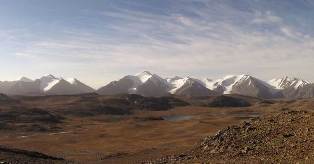


BRENT: The glaciers in Asia’s Tian Shan mountains have lost more than a quarter of their total mass over the past 50 years — a rate of loss about four times greater than the global average during that time, new research shows.
By 2050, half of the remaining ice in the Tian Shan (also spelled Tien Shan) glaciers could be lost, and these shrinking glaciers could reduce valuable water supplies in central Asia and lead to fuel conflicts there, the study found.
The Tian Shan mountain range stretches across 1,550 miles (2,500 kilometers) of central Asia. Melting snow and glaciers from these mountains supply much-needed water to the lowlands of Kazakhstan, Kyrgyzstan and Uzbekistan, which form one of the world’s largest irrigated zones. The melt also supplies water to China’s northwestern Xinjiang Uyghur autonomous region, whose coal, oil and natural-gas reserves are critical to the country’s economic growth.

Karachi Port sets 138-year cargo handling record
KARACHI: Pakistan's maritime sector has achieved a major milestone as Karachi Port set a new record in its 138-year history...