You might also like

WASHINGTON: The diet of astronauts usually calls to mind freeze-dried ice cream and beef stroganoff, but these days, nutrition is advancing even in space. Astronauts on the International Space Station (ISS) now have their own plant growth facility, dubbed Veggie, and with the help of Fairchild Tropical Botanic Garden and Miami students, its future is looking more fertile than ever.
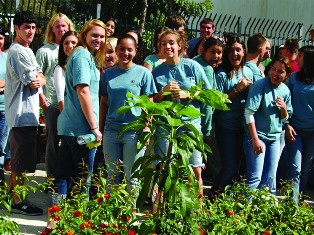
For the 2015-2016 school years, scientists and educators from Fairchild and NASA will facilitate plant growing experiments for local middle and high scholars participating in the famous Fairchild Challenge science competition. The students will work to find plants that can be easily grown in the microgravity conditions on ISS, helping astronauts sustain themselves on longer missions.
The participating schools will receive a shelving unit with LED lighting and a small compartment for growing plants — a setup similar to the environment on the ISS. “The tricky part is finding plants small enough to produce food in such a limited space,” says Dr. Carl Lewis, Fairchild’s Director.
The conditions will be just like growing plants in space, without the weightlessness.
“We call the shelving units mini botany labs because they can be used for many different kinds of experiments with plants,” adds Lewis. “Later in the school year, students will use the mini botany labs to grow rare orchids as part of our Million Orchid Project.”
Fairchild will be hosting a teacher training event, led by NASA scientists, on September 26.