Customs Today
  • Home
  • Islamabad
  • Karachi
  • Lahore
  • National
  • Transfers and Postings
  • Chambers & Associations
  • Business
No Result
View All Result
Customs Today
  • Home
  • Islamabad
  • Karachi
  • Lahore
  • National
  • Transfers and Postings
  • Chambers & Associations
  • Business
No Result
View All Result
Customs Today
No Result
View All Result
Home Science & Technology Science

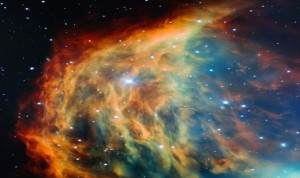
Astronomers click most detailed images of vast Medusa Nebula

byCustoms Today Report
23/05/2015
in Science, Science & Technology
Share on FacebookShare on Twitter

PARIS: Astronomers at the European Southern Observatory (ESO) are proudly displaying what is the most detailed image ever captured of the vast planetary nebula, Medusa. And what their powerful telescopes have revealed are the beautiful death throes of a dying star.

Discovered in 1955, the Medusa Nebula, known technically as Sharpless 2-274, is located in the constellation of Gemini and spans some four light-years across. It would take 1500 light-years to reach this massive nebula and it wasn’t until the 1970s that researchers were able to visualize it with enough clarity to confirm its identity as a planetary nebula.


You might also like

Tesla driverless system to use updated radar technology

12/09/2016

Apple to develop its own self-driving technology

10/09/2016

Today, however, astronomers have at their disposal ESO’s Very Large Telescope, the world’s most advanced optical instrument which combines a number of scopes working in unison, allowing astronomers detailed images up to 25 times finer than can be achieved using a single telescope. Not only have they captured incredible images like Medusa, the VLT has even enabled scientists to track individual stars encircling the supermassive black hole at the center of the Milky Way.

Named after the dreadful creature from Greek mythology, the Medusa Nebula got its name from the serpentine filaments of glowing gas that emanate from the star, which conjure images of the snakes that sprung from the mythological creature’s head. These colorful glowing gasses are made up of hydrogen and oxygen, thrown off intermittently as the star ejects its mass into space, which can last for tens of thousands of years.


 

Related Stories

Tesla driverless system to use updated radar technology

byCT Report
12/09/2016

WASHINGTON: Electric carmaker Tesla announced Sunday it was upgrading its Autopilot software to use more advanced radar technology. In a...

Apple to develop its own self-driving technology

byCT Report
10/09/2016

SAN FRANCISCO: Apple may not become an automaker, but it still wants to develop its own self-driving technology. The iPhone-maker's...

NASA spots slowest known magnetar

byCT Report
10/09/2016

WASHINGTON: Astronomers have found evidence of a magnetar - magnetised neutron star - that spins much slower than the slowest...

‘YouTubers’ outshining old-school television

byCT Report
09/08/2016

SAN FRANCISCO: A media revolution is taking place, and most people over 35 years of age aren’t tuned in. Millennial...

Next Post

FIA arrests couple involved in human smuggling

  • Terms and Conditions
  • Disclaimer

© 2011 Customs Today -World's first newspaper on customs. Customs Today.

No Result
View All Result
  • Transfers and Postings
  • Latest News
  • Karachi
  • Islamabad
  • Lahore
  • National
  • Chambers & Associations
  • Business
  • About Us

© 2011 Customs Today -World's first newspaper on customs. Customs Today.