Customs Today
  • Home
  • Islamabad
  • Karachi
  • Lahore
  • National
  • Transfers and Postings
  • Chambers & Associations
  • Business
No Result
View All Result
Customs Today
  • Home
  • Islamabad
  • Karachi
  • Lahore
  • National
  • Transfers and Postings
  • Chambers & Associations
  • Business
No Result
View All Result
Customs Today
No Result
View All Result
Home Science & Technology Science

Astronomers discovered gargantuan galaxy cluster with new star

byCustoms Today Report
11/09/2015
in Science, Science & Technology
Share on FacebookShare on Twitter

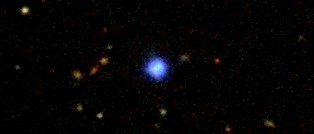
LEEDS: An international team of astronomers has discovered a gargantuan galaxy cluster with a core bursting with new stars – an incredibly rare find. The discovery, made with the help of the NASA/ESA Hubble Space Telescope, is the first to show that gigantic galaxies at the centres of massive clusters can grow significantly by feeding off gas stolen from other galaxies.

Galaxy clusters are vast families of galaxies bound together by gravity. Our own galaxy, the Milky Way resides within a small galaxy group known as the Local Group, which itself is a member of the massive Laniakea supercluster.


You might also like

Tesla driverless system to use updated radar technology

12/09/2016

Apple to develop its own self-driving technology

10/09/2016

Galaxies at the centres of clusters are usually made of stellar fossils – old, red or dead stars. However, astronomers have now discovered a giant galaxy at the heart of a cluster named SpARCS1049+56 that seems to be bucking the trend, instead forming new stars at an incredible rate.

“We think the giant galaxy at the centre of this cluster is furiously making new stars after merging with a smaller galaxy,” explained Tracy Webb of McGill University, Montreal, Canada, lead author of a new paper accepted for publication in The Astrophysical Journal.

The galaxy was initially discovered using NASA’s Spitzer Space Telescope and the Canada-France-Hawaii Telescope, located on Mauna Kea in Hawai’i and confirmed using the W.M. Keck Observatory, also on Mauna Kea. Follow-up observations using the NASA/ESA Hubble Space Telescope allowed the astronomers to explore the galaxy’s activity.


Related Stories

Tesla driverless system to use updated radar technology

byCT Report
12/09/2016

WASHINGTON: Electric carmaker Tesla announced Sunday it was upgrading its Autopilot software to use more advanced radar technology. In a...

Apple to develop its own self-driving technology

byCT Report
10/09/2016

SAN FRANCISCO: Apple may not become an automaker, but it still wants to develop its own self-driving technology. The iPhone-maker's...

NASA spots slowest known magnetar

byCT Report
10/09/2016

WASHINGTON: Astronomers have found evidence of a magnetar - magnetised neutron star - that spins much slower than the slowest...

‘YouTubers’ outshining old-school television

byCT Report
09/08/2016

SAN FRANCISCO: A media revolution is taking place, and most people over 35 years of age aren’t tuned in. Millennial...

Next Post

South African Customs arrests woman on smuggling 3.75kg cocaine

  • Terms and Conditions
  • Disclaimer

© 2011 Customs Today -World's first newspaper on customs. Customs Today.

No Result
View All Result
  • Transfers and Postings
  • Latest News
  • Karachi
  • Islamabad
  • Lahore
  • National
  • Chambers & Associations
  • Business
  • About Us

© 2011 Customs Today -World's first newspaper on customs. Customs Today.